That bottle of soy sauce in your pantry might not be what you think it is. Most home cooks and Asian food lovers assume they’re buying authentic soy sauce, but the reality is shocking: the majority of popular brands sold in grocery stores are chemically processed imitations that bear little resemblance to real soy sauce.
For a country obsessed with Indo-Chinese food, most home kitchens and even many restaurants are using chemically produced soy sauce instead of traditionally fermented ones. The difference isn’t just technical—it’s the difference between flat saltiness and deep umami.
Whether you are obsessed with your food, a healthy consumer or simply curious about the truth of this basic condiment, this guide is for you. I will explain to you how some major brands in the soy sauce industry cut corners with chemical processing instead of traditional brewing methods, reveal the red flags that help you spot fake soy sauce on store shelves, and show you how to find genuine soy sauce that delivers authentic taste and quality ingredients your family deserves.
What Is Real Soy Sauce?
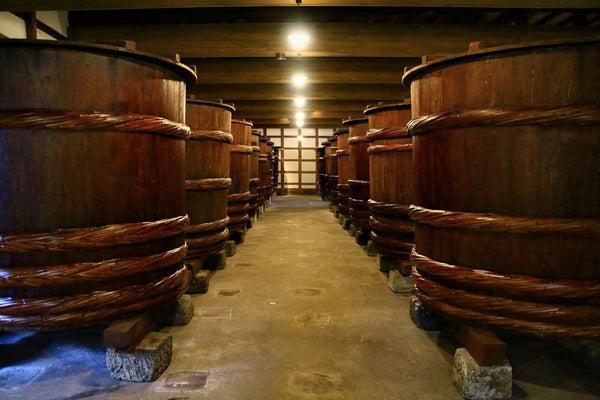
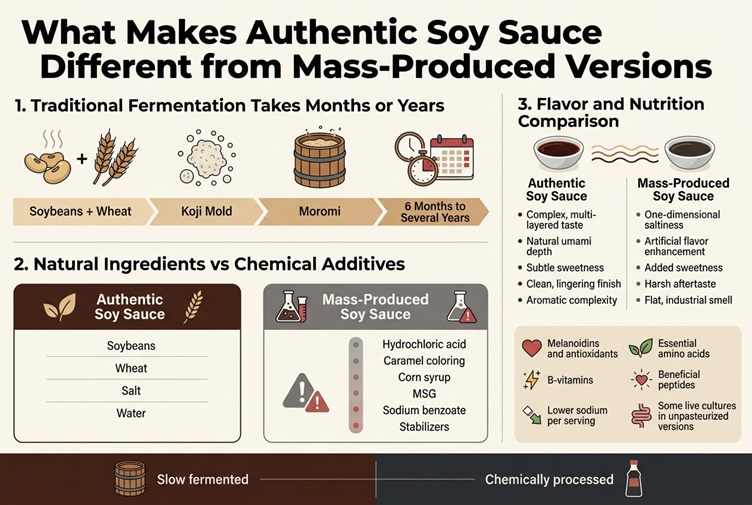
Authentic soy sauce production follows an ancient brewing method that demands patience and expertise. The process begins with steamed soybeans and roasted wheat, which are inoculated with Aspergillus oryzae (koji mold) and aged for several days. This creates a mash called moromi, which is then mixed with brine and left to ferment in wooden vats or ceramic containers for anywhere from six months to several years.
This long fermentation process allows the naturally occurring bacteria and yeasts break down proteins and starches, developing deep umami, natural sweetness, complex aroma and long finish that simply cannot be replicated through artificial means. A longer fermentation gives enzymes time to work slowly and develop that characteristic deep, rich taste that defines genuine soy sauce ingredients.
Mass-produced versions skip this time-intensive process entirely, using acid hydrolysis to break down soy proteins in a matter of days. This chemical shortcut produces a salty liquid that lacks the nuanced flavours of traditionally brewed soy sauce.
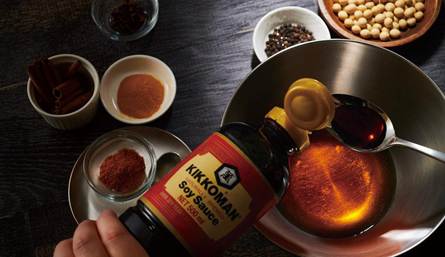
A global benchmark for this style is Kikkoman, known for traditional brewing methods.
Natural Ingredients Versus Chemical Additives
Traditional soy sauce contains just four basic ingredients: soybeans, wheat, salt, and water. Some premium varieties include only soybeans and salt. The simplicity of this ingredient list stands in stark contrast to chemically processed soy sauce, which often contains a cocktail of artificial additives.
Fake soy sauce brands usually use hydrochloric acid to rapidly break down soy protein, creating amino acids that mimic the salty-savoury taste of real soy sauce. To compensate for the lack of natural fermentation flavours, manufacturers add:
- Caramel colouring for the characteristic dark brown appearance
- Corn syrup or high fructose corn syrup for sweetness
- Artificial flavour enhancers like MSG
- Preservatives such as sodium benzoate
- Chemical stabilizers and thickening agents
Flavour Complexity and Umami Depth Comparison
The difference in taste between authentic and mass-produced soy sauce is instantly clear when the two are compared. Traditionally fermented soy sauce offers layers of flavour that develop on the palate – an initial saltiness gives way to sweet, fruity, and even wine-like notes, followed by a deep, lingering umami finish.
Real vs artificial soy sauce shows dramatic differences in flavour profiles:
| Authentic Soy Sauce | Mass-Produced Soy sauce |
| Complex, multi-layered taste | One-dimensional saltiness |
| Natural umami depth | Artificial flavour enhancement |
| Subtle sweetness from fermentation | Added corn syrup sweetness |
| Clean, lingering finish | Harsh, chemical aftertaste |
| Aromatic complexity | Flat, industrial smell |
The natural fermentation process creates over 300 different flavour compounds, including alcohols, esters, and organic acids that contribute to the sauce’s sophisticated taste profile. Chemical processing cannot reproduce this complexity.
Nutritional Benefits of Naturally Brewed Soy Sauce
Traditional soy sauce brewing creates beneficial compounds that extend beyond basic seasoning. The fermentation process produces antioxidants, particularly melanoidins, which form during the Maillard reaction between amino acids and sugars. These compounds have been linked to potential health benefits including improved digestion and antioxidant properties.
Naturally brewed soy sauce also contains:
- Essential amino acids from protein breakdown
- B-vitamins produced during fermentation
- Beneficial peptides that may support heart health
- Lower sodium content per serving compared to many artificial versions
The live cultures from some unpasteurized traditional soy sauces may also promote gut health, like other fermented foods such as kimchi or miso. Mass-produced alternatives lack these beneficial microorganisms and often contain higher levels of sodium and chemical preservatives that may negate potential health benefits.
How Major Brands Cut Corners with Chemical Processing
Acid Hydrolysis Method Produces Soy Sauce in Days
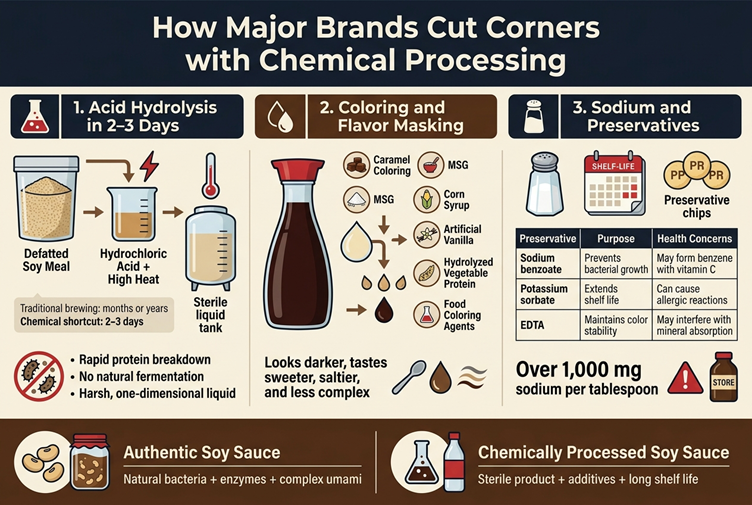
Mass-produced chemically processed soy sauce relies on acid hydrolysis, a process that removes everything important for traditional soy sauce production. While genuine soy sauce takes months or even years to ferment naturally, major brands use hydrochloric acid to break down soy protein in just 2-3 days. This chemical shortcut destroys the complex flavour compounds such as deep umami, natural sweetness that are formed during natural fermentation.
The acid hydrolysis process starts with defatted soy meal – already a cheap byproduct rather than whole soybeans. Manufacturers mix this meal with concentrated hydrochloric acid at high temperatures, forcing rapid protein breakdown. The result is a harsh, one-dimensional liquid that lacks the depth and umami complexity of authentic soy sauce.
Fake soy sauce brands then neutralize this acidic mixture with sodium carbonate, creating a bland base that requires extensive artificial enhancement. The entire process eliminates beneficial bacteria and enzymes that naturally develop during traditional brewing, leaving behind a sterile product that mimics soy sauce in colour and saltiness but misses the mark on authentic flavour and nutritional value.
Artificial Colouring and Flavouring Agents Used
Since acid hydrolysis produces a pale, flavourless liquid, manufacturers add a lot of artificial additives to create the appearance like that of real soy sauce. Caramel colouring becomes the primary tool for achieving that familiar dark brown hue that consumers expect.
Common artificial flavour enhancers include:
- Monosodium glutamate (MSG) – creates artificial umami taste
- Corn syrup – adds sweetness to mask harsh chemical flavours
- Artificial vanilla – attempts to replicate fermentation complexity
- Hydrolysed vegetable protein – provides additional savoury notes
- Food colouring agents – ensures consistent dark appearance
These additives produce a product that looks and tastes somewhat like soy sauce but lacks the nuanced flavour profile that comes from natural fermentation. The artificial flavouring often results in an overpowering saltiness or cloying sweetness that overwhelms food rather than enhancing it.
High Sodium Content and Preservatives Added
Mass produced soy sauce dangers extend beyond artificial flavouring to excessive sodium levels and chemical preservatives. Since acid hydrolysis strips away natural preservation qualities that develop during fermentation, manufacturers compensate with high salt concentrations and synthetic preservatives.
Chemical preservatives commonly found in fake soy sauce brands include:
| Preservative | Purpose | Health Concerns |
| Sodium benzoate | Prevents bacterial growth | May form benzene when mixed with vitamin C |
| Potassium sorbate | Extends shelf life | Can cause allergic reactions |
| EDTA | Maintains colour stability | Potential mineral absorption interference |
The sodium content in chemically processed soy sauce often exceeds 1,000mg per tablespoon – significantly higher than traditionally brewed varieties. This excessive salt serves dual purposes: masking the harsh chemical taste and extending shelf life without natural fermentation preservatives.
Red Flags That Reveal Fake Soy Sauce on Store Shelves
Ingredient Lists Containing Hydrolysed Vegetable Protein
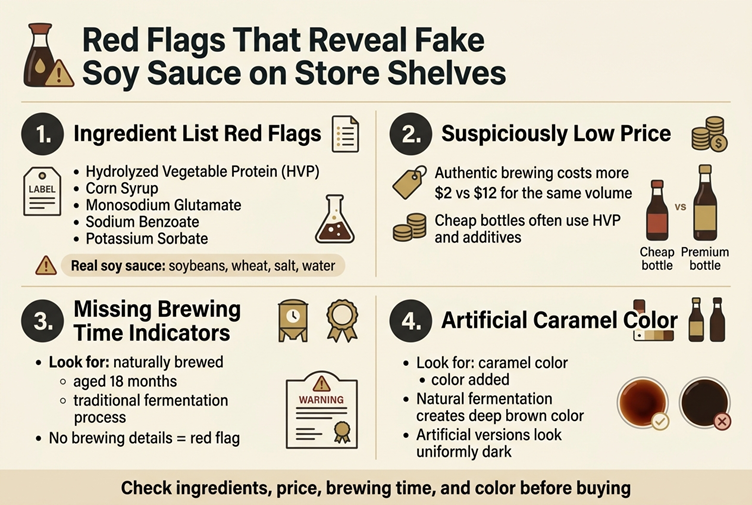
The most obvious red flag when spotting fake soy sauce brands is the presence of hydrolysed vegetable protein (HVP) in the ingredient list. This chemical shortcut replaces the natural fermentation process that creates authentic soy sauce.
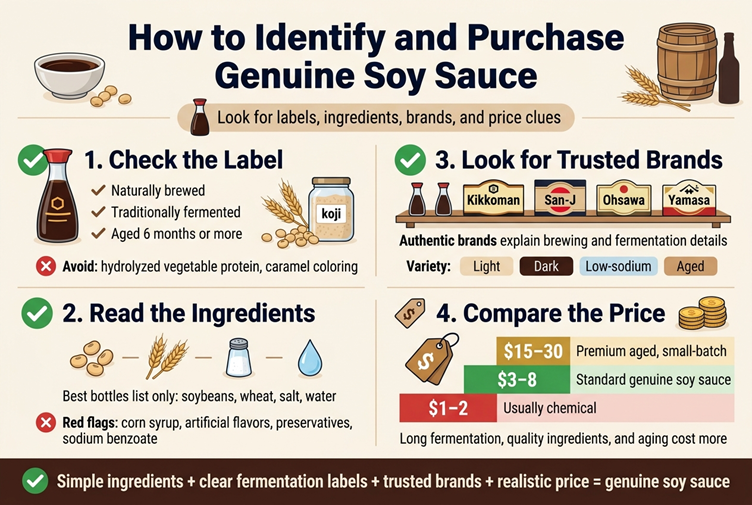
Real soy sauce should contain only four basic ingredients: soybeans, wheat, salt, and water. When you see HVP, corn syrup, preservatives like sodium benzoate / potassium sorbate or artificial flavour enhancers like monosodium glutamate on the label, you’re looking at a chemically processed soy sauce.
Suspiciously Low Prices Compared to Authentic Brands
Price serves as a reliable indicator when distinguishing between real vs artificial soy sauce. Authentic soy sauce requires significant time, quality ingredients, and traditional brewing facilities, which naturally drives up production costs. When you find bottles priced at a fraction of what premium brands charge, there’s usually a reason.
Lack of Traditional Brewing Time Indicators on Labels
Quality soy sauce brands proudly display their brewing time on labels because it represents craftsmanship and dedication to traditional methods. Look for phrases like “naturally brewed,” “aged 18 months,” or “traditional fermentation process.” These indicators signal that the manufacturer follows time-honoured production methods. Fake soy sauce brands avoid mentioning brewing time because they don’t actually brew their products.
Artificial Caramel Colour Instead of Natural Fermentation Colour
The deep, rich brown colour of traditional soy sauce develops naturally through the Maillard reaction during fermentation. This process creates complex flavours and the characteristic dark amber hue that signals quality. Chemically processed soy sauce lacks this natural colour development, so manufacturers add caramel colour to mimic the appearance.
How to Identify and Purchase Genuine Soy Sauce
Best Soy Sauces Available in India
1. Kikkoman Naturally Brewed Soy Sauce
Best for: Everyday cooking, beginners to professionals
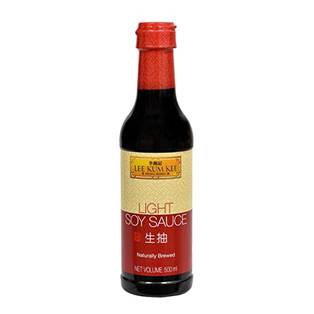
2. Lee Kum Kee Soy Sauce
Best for: Indo-Chinese cooking, wok dishes
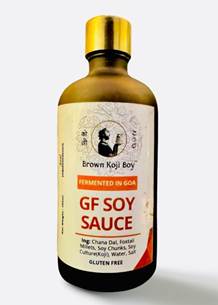
3. Brown Koji Boy Soy Sauce
Best for: Food enthusiasts, premium cooking
Authentic brands typically offer multiple varieties – light, dark, low-sodium, and specialty aged versions. They invest in explaining the differences between their products because they have real distinctions to share, unlike mass producers who often offer just one generic formula.
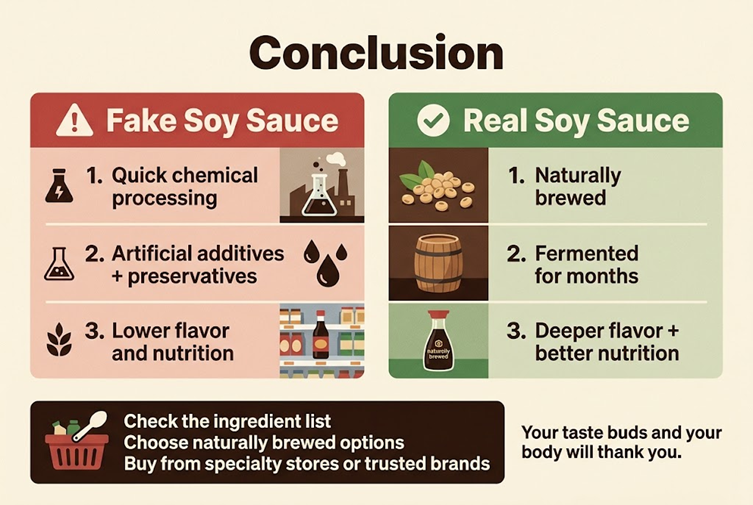
The problem isn’t that soy sauce is bad.
The problem is that most easily available options aren’t real soy sauce anymore. Upgrade your bottle, and you upgrade your cooking and your palate.