We all have that one friend who says, “No MSG please.”
And we all nod along—without really knowing why.
Because the truth is, most of us don’t actually know what MSG is. We just know it’s something we’re supposed to avoid. But what if that belief isn’t entirely true?
For years, MSG—monosodium glutamate—has carried a bad reputation. Say the word out loud and you’ll often see people react instantly: “Oh, that’s not good for you, right?” Somewhere along the way, it became that one ingredient people proudly avoid… even while unknowingly eating foods that naturally contain it.
The funny thing is, the story of MSG isn’t really about science—it’s about perception.
At The Curious Wok, I’ve always believed that food deserves curiosity, not assumptions. And MSG is one of those ingredients that really makes you question what you’ve been told.
So, What Exactly Is MSG?
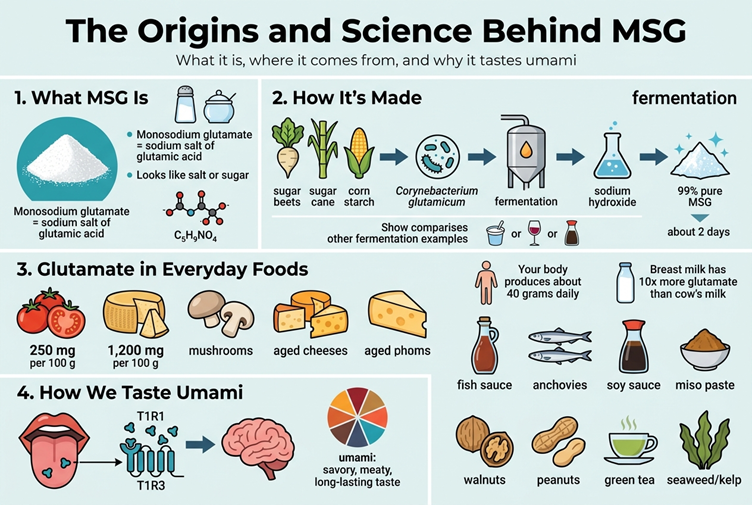
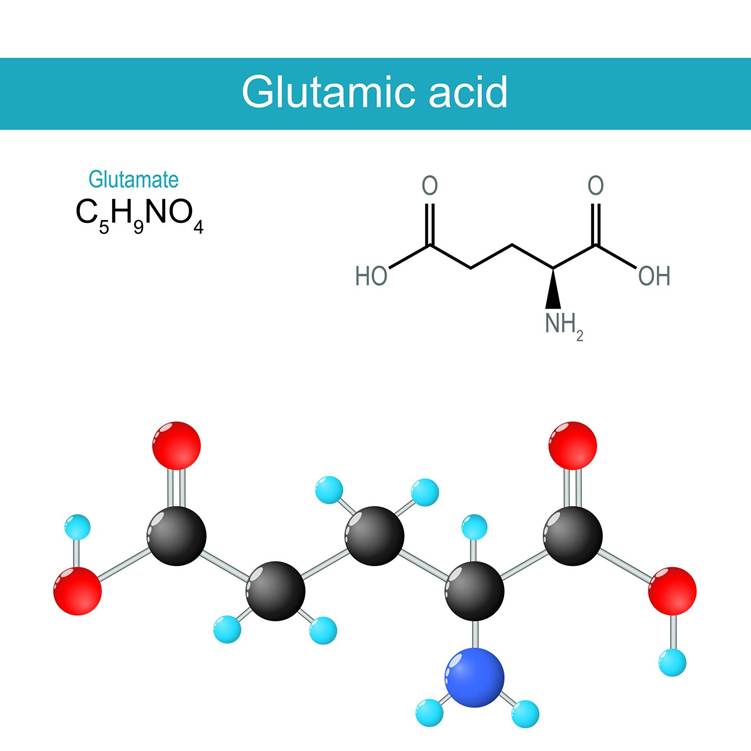
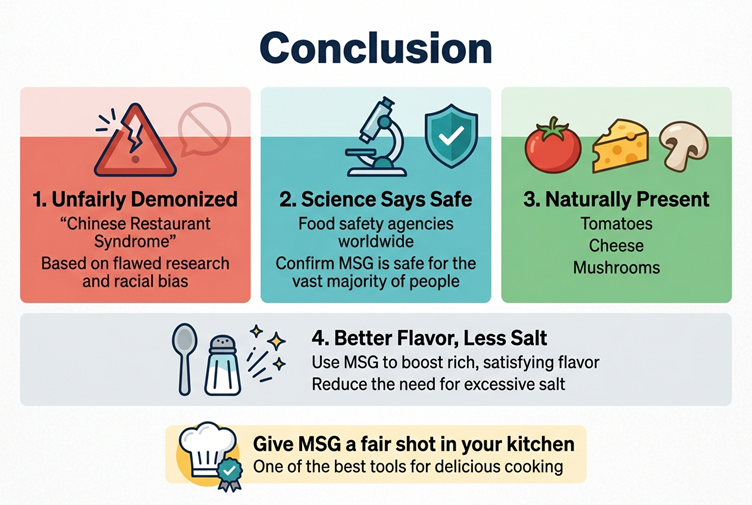
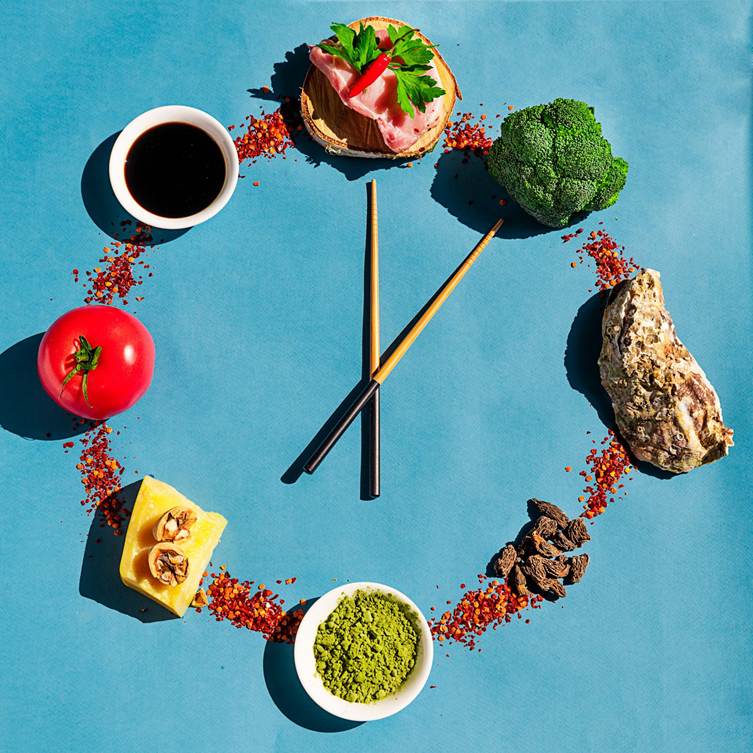
At its core, MSG is just the sodium salt of glutamic acid—an amino acid that plays a crucial role in human metabolism and exists naturally in a lot of foods, we eat regularly. Tomatoes contain roughly 250 milligrams of glutamate per 100 grams, while aged Parmesan cheese packs an impressive 1,200 milligrams per 100 grams. Mushrooms, particularly shiitake and dried varieties, are glutamate powerhouses.
Your body produces about 40 grams of glutamate daily as part of normal protein metabolism. Breast milk contains ten times more glutamate than cow’s milk, suggesting nature considers this compound essential for human development. Other glutamate-rich foods include:
- Aged cheeses (Roquefort, cheddar, Gruyère)
- Fish sauce and anchovies
- Soy sauce and miso paste
- Walnuts and peanuts
- Green tea
- Seaweed and kelp
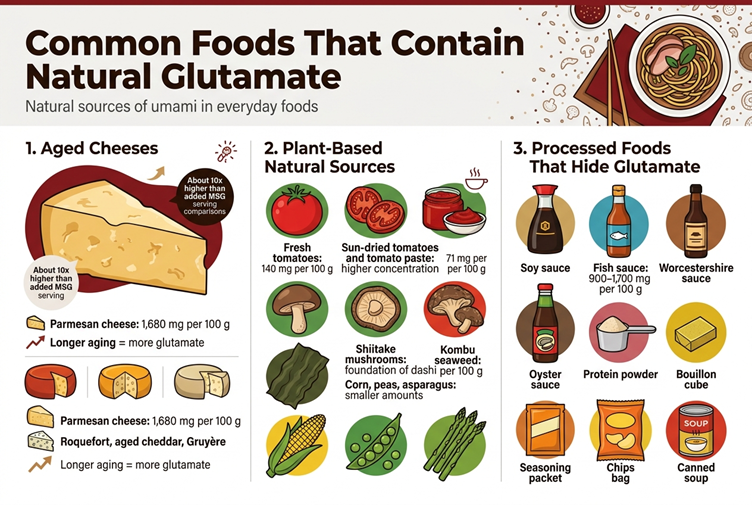
How your taste buds process umami flavour
Your tongue contains specialized taste receptors called T1R1 and T1R3 that specifically detect glutamate molecules. When glutamate binds to these receptors, they send signals to your brain identifying the umami taste – that savoury, meaty, satisfying flavour that makes foods more appealing.
Umami doesn’t compete with the other four basic tastes (sweet, sour, salty, bitter) but enhances them. Think about how a sprinkle of Parmesan cheese transforms a simple pasta dish or how a dash of soy sauce elevates stir-fried vegetables. The glutamate amplifies existing flavours while adding depth and richness.
Your saliva naturally contains enzymes that break down proteins into glutamate, which explains why thoroughly chewed food often tastes better. This biological process suggests humans evolved to appreciate and seek out glutamate-rich foods for their nutritional value.
The difference between natural and synthetic glutamate
Chemically speaking, there’s absolutely no difference between glutamate from a tomato and glutamate produced through fermentation. Both have identical molecular structures: C₅H₉NO₄. Your taste buds and digestive system process them identically because they are literally the same compound.
The distinction between “natural” and “synthetic” glutamate is purely about production methods, not molecular composition. Whether glutamate comes from aged cheese or manufactured MSG, your body treats it exactly the same way. Laboratory analyses cannot differentiate between the two sources because no difference exists at the molecular level.
Then Why Does It Have Such a Bad Name?
The fear around MSG can be traced back to a single letter published in 1968 in the New England Journal of Medicine. It casually mentioned symptoms like headaches after eating Chinese food, and the term “Chinese Restaurant Syndrome” was born.
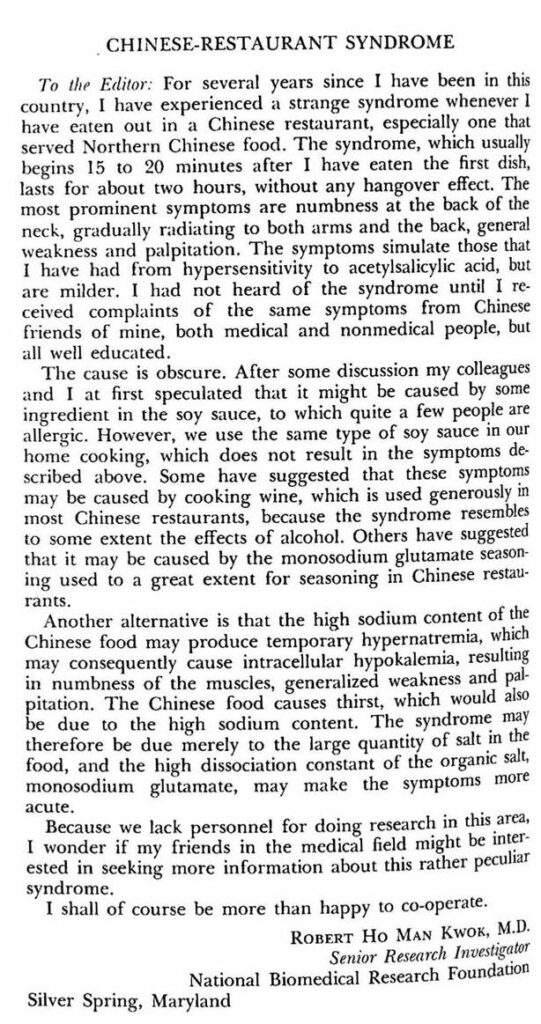
The issue? It wasn’t based on solid scientific evidence.
Since then, multiple studies have tried—and largely failed—to prove a consistent link between MSG and those symptoms for most people. Major bodies like the FDA and WHO have repeatedly stated that MSG is safe when consumed in normal amounts.
But once a narrative sticks, it’s hard to shake. And in this case, it carried a fair bit of cultural bias along with it.
MSG Safety Record and Regulatory Approval
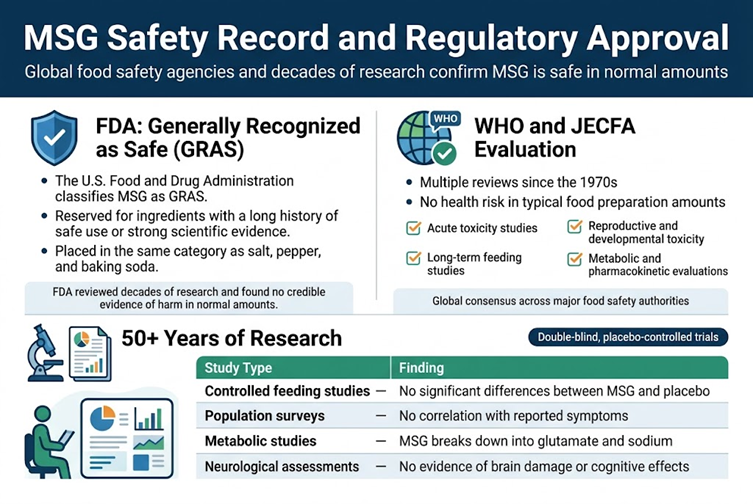
Major universities and research institutions, including Harvard Medical School and the University of California, have published peer-reviewed studies supporting MSG’s safety profile. These studies examined everything from immediate reactions to long-term health outcomes, consistently finding no causal relationship between MSG and adverse health effects.
Daily Consumption Limits and Typical Intake Levels
Regulatory agencies worldwide have not established specific daily intake limits for MSG because toxicological studies have not identified a level at which harmful effects occur. This “no observed adverse effect level” approach is unusual in food additives and speaks to MSG’s remarkable safety profile.
Typical daily MSG consumption patterns:
- Average American intake: 0.55 grams per day
- Average Asian diet intake: 1.2-1.7 grams per day
- Equivalent glutamate from natural sources: 10-20 grams per day
The human body produces about 50 grams of glutamate daily through normal metabolic processes, making dietary MSG intake relatively insignificant compared to endogenous production. When consumed, MSG is immediately broken down in the digestive system into glutamate and sodium—the same components found naturally in tomatoes, cheese, and breast milk.
Research shows that even consuming 3 grams of MSG in a single meal (far exceeding typical use levels) produces no measurable adverse effects in healthy individuals. This safety margin provides substantial protection for consumers, even those who might be particularly sensitive to food additives.
Health Benefits and Culinary Applications
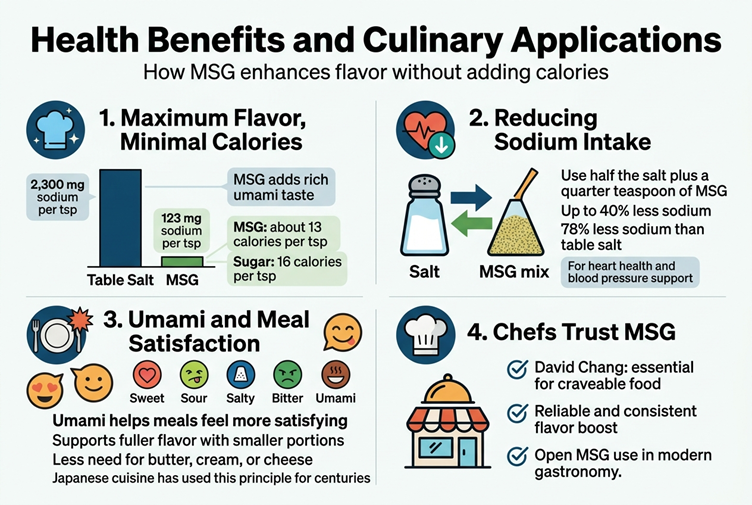
How MSG enhances flavour without adding calories
MSG acts like a flavour booster. A teaspoon has far less sodium than salt (about 123 mg vs. 2,300 mg) while delivering a rich umami taste. It contains only ~13 calories and enhances existing flavours, so you don’t need extra fats, sugar, or heavy ingredients to make food satisfying.
Reducing sodium intake with MSG
Replacing part of your salt with MSG can cut sodium by up to 40%. Since MSG has about 78% less sodium than salt, using a mix (half salt + a little MSG) keeps dishes flavourful with less sodium—helpful for managing blood pressure without compromising taste.
Supporting umami-rich cooking for better meal satisfaction
Umami helps meals feel more complete and satisfying. When all five tastes—sweet, sour, salty, bitter, and umami—are balanced, your brain registers fullness faster. MSG adds that missing savoury depth, helping you feel content without needing heavier ingredients.
Umami-rich foods are also more satiating, meaning fewer post-meal cravings. This is a principle long used in Japanese cuisine, where dishes feel satisfying despite being lighter. Adding a pinch of MSG can recreate that effect, helping you enjoy smaller portions while staying full and satisfied.
The Bottom Line
MSG isn’t good or bad—it’s just… an ingredient.
Like salt, sugar, or fat, it comes down to how you use it. The real conversation shouldn’t be about fear, but about understanding what’s actually on your plate.
Food is a mix of science, culture, and craft. And sometimes, the things we’ve been told to avoid are the ones worth re-examining.
So the next time someone says, “No MSG,” you might just smile—because you know the story is a lot more layered than that.
At The Curious Wok, it’s always curiosity over convention.
And MSG? Not a villain. Just misunderstood.