The Truth About “Authentic” Woks, Fake Marketing & What Actually Matters
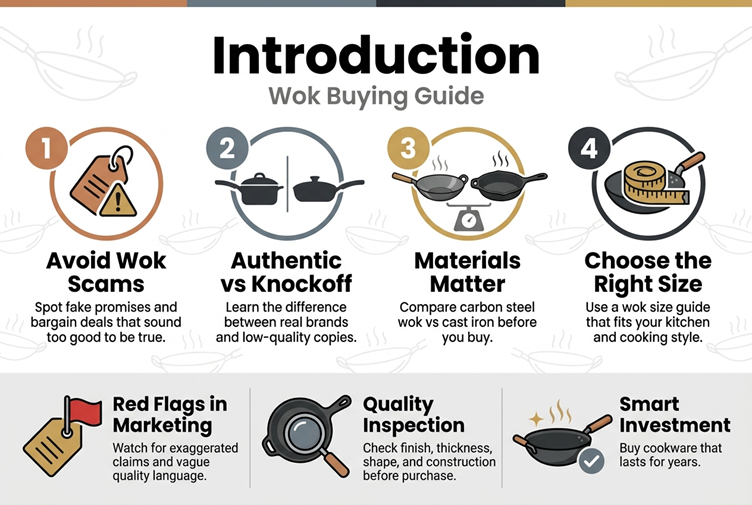
Buying a wok can be weirdly confusing because the market is full of “authentic Asian woks” that are overpriced, poorly made, or flat-out misleading. A lot of brands sell decorative cookware with marketing buzzwords like hand-hammered, chef-grade, or non-stick wok—but they often miss what makes a wok actually good.
The truth is, buying a wok today feels a lot like shopping for olive oil or soy sauce—there’s a lot of branding, very little transparency, and plenty of products designed to look impressive rather than actually cook well.
At The Curious Wok, we believe good cooking starts with understanding your tools—not falling for marketing gimmicks. So here’s your no-BS guide to buying a wok that actually deserves a place in your kitchen.
Why Most Modern Woks Are Terrible
Many mass-market brands have turned the wok into a generic deep frying pan with fancy packaging.
You’ll often find:
- Non-stick coatings marketed as “healthy cooking”
- Decorative hammered textures
- Vague labels like German technology or Japanese engineering
- Lightweight aluminium bodies pretending to be professional cookware
- Expensive celebrity chef branding
These products are designed to sell convenience—not performance.
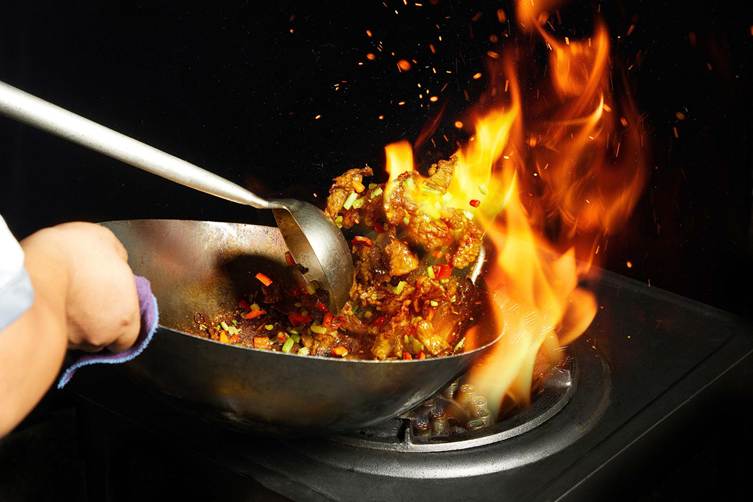
A real wok is built for extremely high heat, fast cooking, quick tossing, and developing charred, smoky flavour known as Wok Hei (breath of the wok).
Most modern retail woks can’t survive the very cooking style they claim to support.
The Best Material: Carbon Steel
If there’s one thing worth remembering from this article, it’s this:
Buy Carbon Steel.
This is what most professional’s use because it:
- Heats up quickly
- Responds fast to temperature changes
- Develops natural seasoning over time
- Gets better the more you cook with it
- Costs far less than premium branded cookware
Unlike fancy non-stick pans, a carbon steel wok actually improves with age.
It starts looking ugly.
Then it starts cooking beautifully.
That dark patina? That’s character.
Why Non-Stick Woks Are a Waste of Money
This may upset cookware brands, but someone has to say it.
Non-stick woks are often marketed by many mainstream cookware companies because they’re easier to sell to beginners.
But here’s the problem:
High heat damages non-stick coatings.
And wok cooking requires high heat.
That means you’re buying a product that fails at its main purpose.
Also:
- Metal spatulas scratch it
- Coating eventually peels
- You’ll never get proper searing
- Lifespan is much shorter
It’s convenience disguised as performance.
Don’t Fall for “Hand-Hammered” Marketing
This one is everywhere.
Many brands advertise “traditional hand-hammered woks,” but mass manufacturing often creates fake hammer marks simply for aesthetics.
Real hand-hammered woks do exist—but they’re usually made by specialized manufacturers and tend to cost significantly more.
Instead, focus on:
- Thickness (1.5–2 mm works well for home cooking)
- Balanced weight
- Comfortable handles
- Strong rivets or welded construction
Function over fake craftsmanship stories.
| Material | Heat Response | Durability | Maintenance | Price Range |
| Carbon Steel | Excellent | High | Moderate | ₹1500-4000 |
| Cast Iron | Good | Very High | High | ₹1000-2500 |
| Stainless Steel | Poor | High | Low | ₹1500-3000 |
| Non-stick | Fair | Low | Low | ₹2000-3500 |
Flat Bottom vs Round Bottom: What Should Indians Buy?
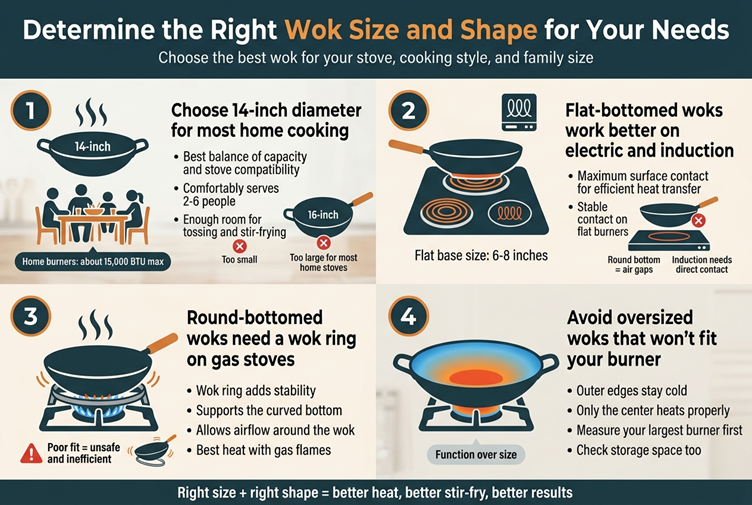
For most Indian homes:
Flat-bottom wok wins.
Why?
Most households cook on standard gas stoves or induction cooktops, making flat-bottom woks far more practical.
Round-bottom woks are fantastic in professional kitchens with powerful burners—but they’re frustrating at home unless you own a wok ring.
Where to Buy a Good Wok in India
Sometimes the best cookware isn’t online.
Check restaurant supply stores or local utensil markets like:
- Crawford Market, Mumbai
- Bhuleshwar Market, Mumbai
- Sadar Bazaar, Delhi
- Burra Bazar, Kolkata
- Restaurant supply stores
These places often sell simple carbon steel woks used by restaurants at far better prices than heavily marketed online brands.
Online marketplaces like Amazon India can work too—but read reviews carefully.
How Much Should a Good Wok Cost?
For home cooking in India:
₹1,500–₹4,000 is usually reasonable for a quality carbon steel wok.
If someone is charging ₹10,000 for a basic wok because it has premium branding and sleek packaging…walk away.
Red Flags That Mean You’re Being Scammed
Avoid woks that claim:
❌ Dishwasher safe carbon steel
❌ Permanent seasoning
❌ Scratch-proof non-stick
❌ No mention of material thickness
❌ Ultra-light professional grade aluminium
❌ “Restaurant style” with no actual material details
If the brand spends more time selling a story than explaining the metal, that’s your sign.
Final Thoughts: Buy Ugly, Cook Beautifully
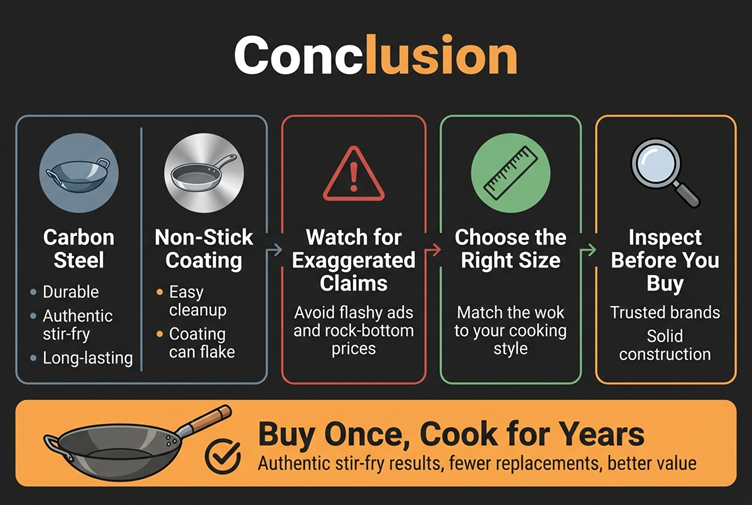
The best wok I’ve seen wasn’t shiny.
It didn’t come in luxury packaging.
No celebrity chef endorsed it.
It looked slightly rough, deeply seasoned, and had probably cooked thousands of meals.
That’s what a real wok should feel like.
At The Curious Wok, we’re obsessed with ingredients—but tools matter too.
And sometimes the best purchase you’ll ever make is the one that looks the least impressive on the shelf.