Ram Laddoo: Delhi’s Crispy, Tangy Street Food That Isn’t Actually a Laddoo
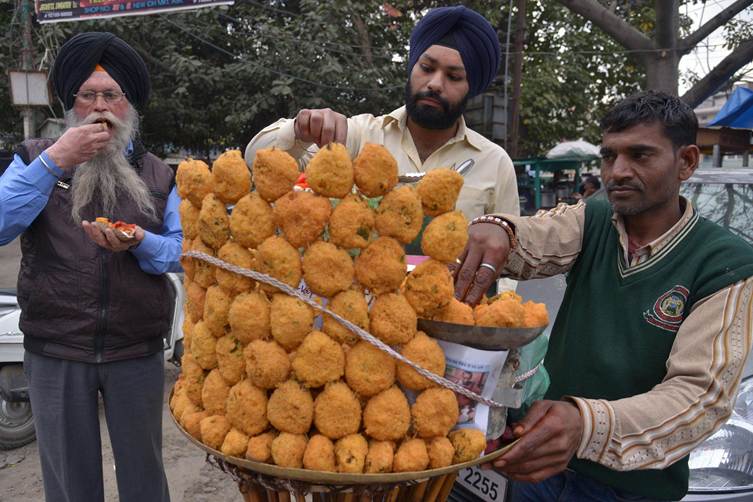
Picture this: you’re walking through the bustling streets of Delhi, and suddenly you catch a whiff of something absolutely irresistible. The aroma of freshly fried goodness fills the air, drawing you toward a small street vendor with a crowd gathered around. What’s causing all this excitement? It’s Ram Laddoo, one of Delhi’s most beloved street food treasures that has been winning hearts for generations.
If you’ve never heard of ram laddoo before, you’re in for a treat: crispy fried moong dal fritters topped with grated radish, green chutney, and sometimes a splash of tangy mooli water. It’s crunchy, spicy, refreshing, and wildly addictive.
This incredible Delhi street food is more than just a snack – it’s a cultural experience that tells the story of the city’s rich food heritage. Whether you’re a seasoned street food enthusiast or someone just starting to explore the world of Indian snacks, ram laddoo offers a perfect introduction to the magic of Delhi’s street food scene.
For a city obsessed with Chole Bhature, Golgappa, and Aloo Tikki, Ram Laddoo quietly holds its own—and honestly deserves far more attention.
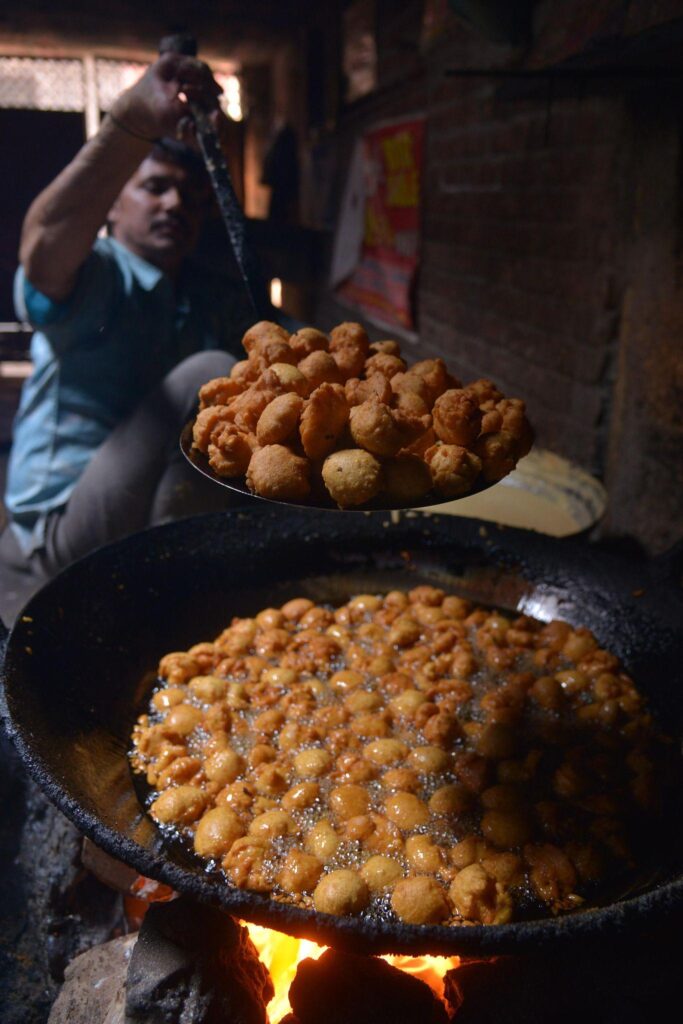
How Ram Laddoo Got It’s Name?
The exact origin of the name Ram Laddoo is still somewhat mysterious—like many iconic Indian street foods, there’s no officially documented history. But there are a few widely believed theories behind the name.
The “Laddoo” Part
Despite being savoury, Ram Laddoo is shaped like small round fritters, which likely explains the word laddoo. In India, many foods get playful names based on appearance rather than taste.
So even though it isn’t a sweet Laddoo, the shape probably inspired the name.
Why “Ram”?
This part is less certain.
Theory 1: Named After a Vendor
Many Delhi street foods became associated with the vendors who popularized them. It’s possible an early seller named Ram became famous for these fritters, and the name stuck.
This is common in Indian food culture:
- dishes named after shop owners
- stalls becoming bigger than the recipe itself
- local nicknames turning into permanent food identities
Theory 2: A Simple North Indian Street Name
“Ram” has historically been a very common North Indian name and is often casually attached to local snacks, shops, and eateries. Over time, “Ram Laddoo” may simply have become an easy-to-remember street-food identity.
Theory 3: Old Delhi Street Food Culture
Some food historians believe the name emerged organically from Delhi’s old bazaar culture, where catchy names helped vendors stand out in crowded markets.
And honestly—it worked.
Because “fried moong dal fritters with grated radish” doesn’t exactly roll off the tongue like Ram Laddoo does.
The Curious Wok Take
The mystery is part of the charm.
Like many great street foods, Ram Laddoo belongs more to the people than to recorded culinary history. Its story survives through vendors, markets, memories, and generations of Delhiites who grew up eating it standing beside crowded carts with green chutney dripping down paper plates.
And perhaps that’s exactly how street food history should feel: slightly blurry, deeply local, and impossible to separate from the city itself.
What Exactly Is Ram Laddoo?
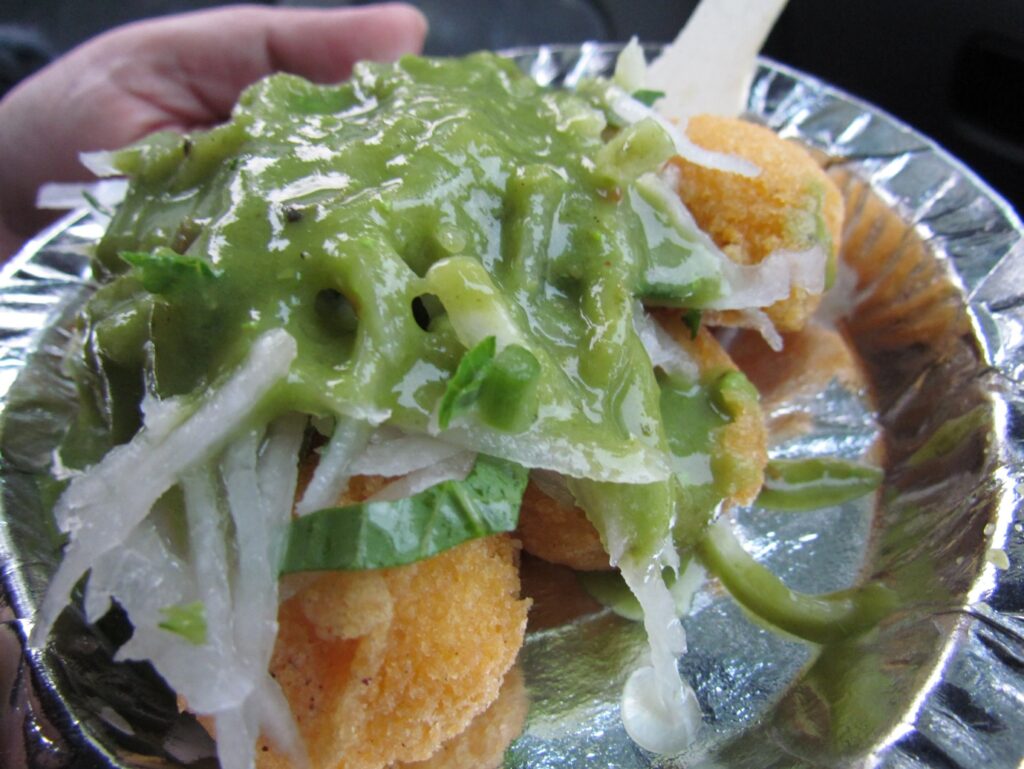
Despite the name, Ram Laddoo has nothing to do with traditional Indian sweets.
These bite-sized fritters are made using soaked and ground Moong Dal and sometimes Chana Dal, whipped until airy and deep-fried until golden.
What makes them special is what happens after frying:
- A generous pile of freshly grated radish
- Bright green coriander-mint chutney
- A sprinkle of black salt and spices
- Optional green chilies for brave eaters
The hot fritters + cold crunchy radish combination is what makes this dish unforgettable.
Think of it as Delhi’s answer to the perfect texture contrast.
Best Places to Eat Ram Laddoo in Delhi
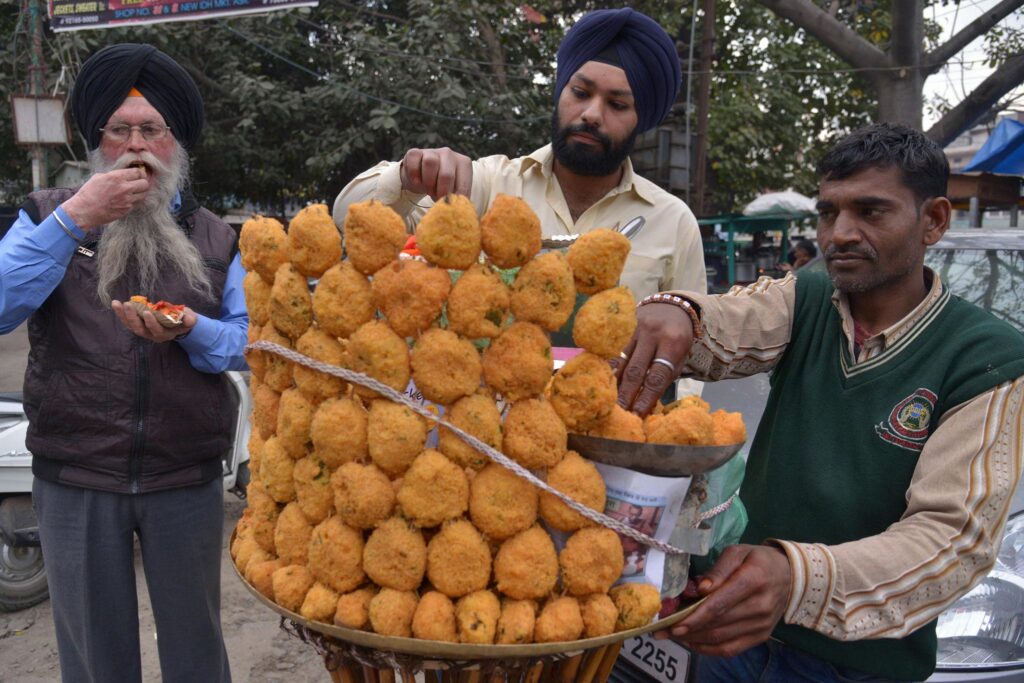
Lajpat Nagar Central Market
Karol Bagh Market
Kamla Nagar Market
Can You Make Ram Laddoo at Home?
Yes—and it’s surprisingly simple.
Ingredients:
- Moong Dal: 1 cup
- Chana Dal: ½ cup
- Urad Dal: ¼ cup
- Ginger: 1 inch
- Green Chilli: 3-4 no.
- Asafoetida: 1tsp
- Salt: to taste
- Raddish: grated to garnish
- Green Chutney: 1 tbsp
- Oil: to fry
Method:
- Wash & soak lentils for 4–5 hours
- Grind the soaked lentils with ginger, asafoetida, green chillies and very little water into a smooth paste
- Once ground, transfer to a bowl and whisk well until light and fluffy, then add salt
- Heat oil to medium-high heat, drop small dumplings of the batter into oil and fry until golden brown
- Remove with slotted spoon and serve hot topped with grated radish and green chutney
Why Ram Laddoo Deserves More Hype
In an era where every regional dish gets rebranded as “gourmet small plates,” Ram Laddoo remains beautifully unchanged.
No fancy plating.
No reinvention.
No unnecessary fusion experiments.
Just a vendor, a kadhai full of hot oil, fresh radish, and years of muscle memory.
And maybe that’s exactly why it tastes so good.
At The Curious Wok, we love foods that tell stories—and Ram Laddoo tells the story of Delhi in one bite: chaotic, crunchy, spicy, and impossible to forget.
Have you tried Ram Laddoo in Delhi?
Tell us your favourite spot—you might help someone discover their next great street food obsession.