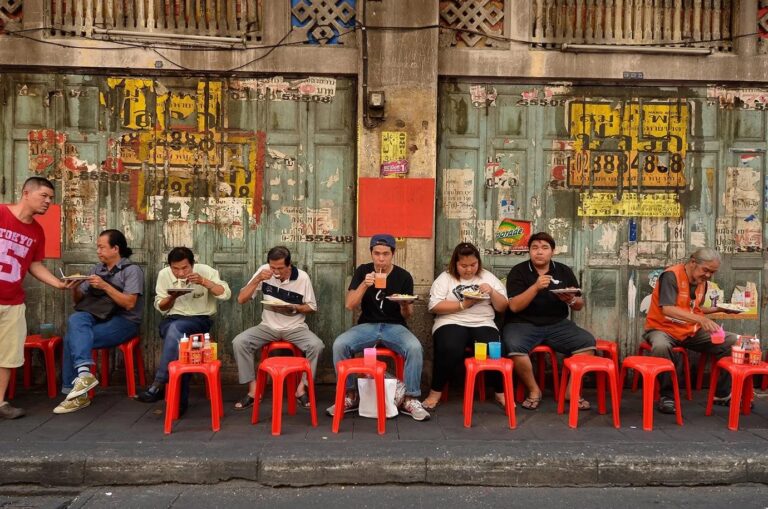
Today, Thai street food feels inseparable from Thailand itself.
It’s the sizzling wok of Pad Thai on a crowded street in Bangkok.
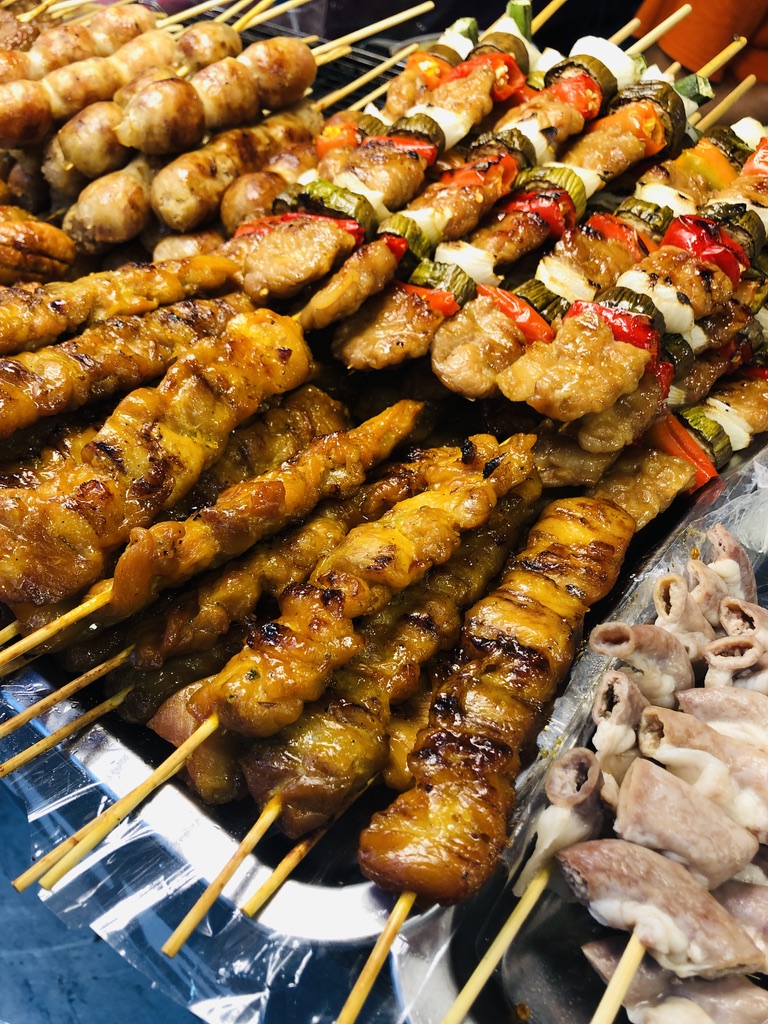
The smoky aroma of Moo Ping grilling beside busy train stations.
The sharp punch of Som Tam being pounded in roadside mortars.
The colourful chaos of floating markets packed with tourists chasing the perfect photograph..
To many travellers, it feels timeless—as if Thailand has always eaten this way. But that version of history misses something important.
The Thai street food culture as we know it today wasn’t born purely from culinary tradition. It was shaped by migration, modernization, war, government policy, urbanization, and survival.
Behind every sizzling wok and plastic stool lies a history far deeper than most realize. Get ready to uncover the real story behind every bite.
Before street carts: Thailand’s floating food culture
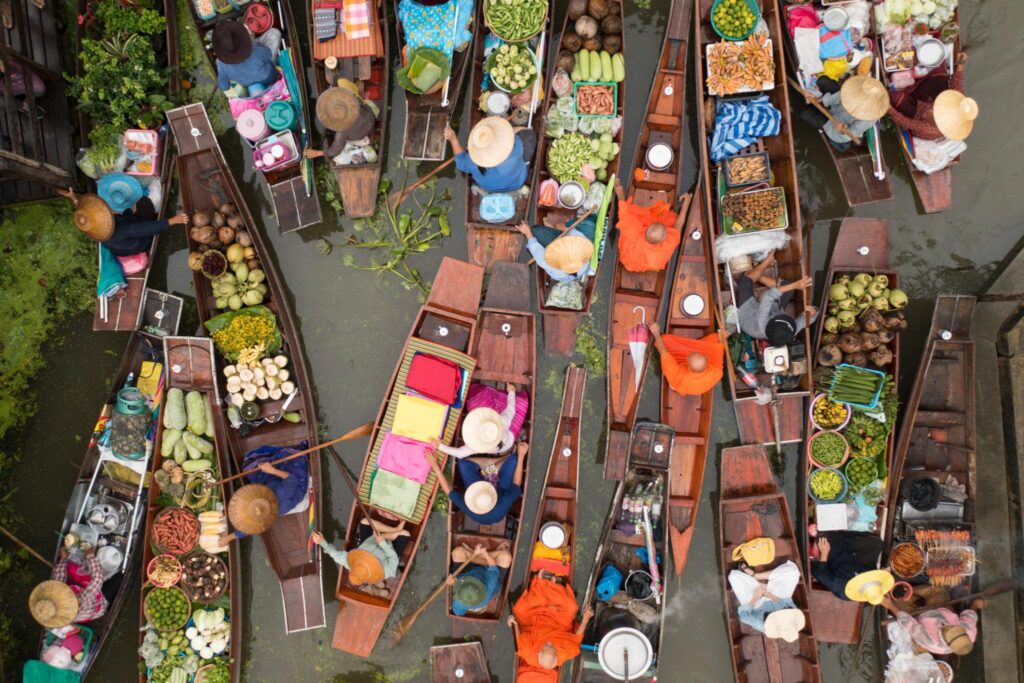
Long before Bangkok’s streets filled with sizzling carts and roadside stalls, much of central Thailand revolved around water.
In the 18th and early 19th centuries, canals acted as the country’s main arteries of trade and daily life.
Food vendors drifted through these waterways selling meals directly from wooden boats, creating an early mobile food culture long before modern street carts appeared.
From the canals came:
- Fragrant rice dishes
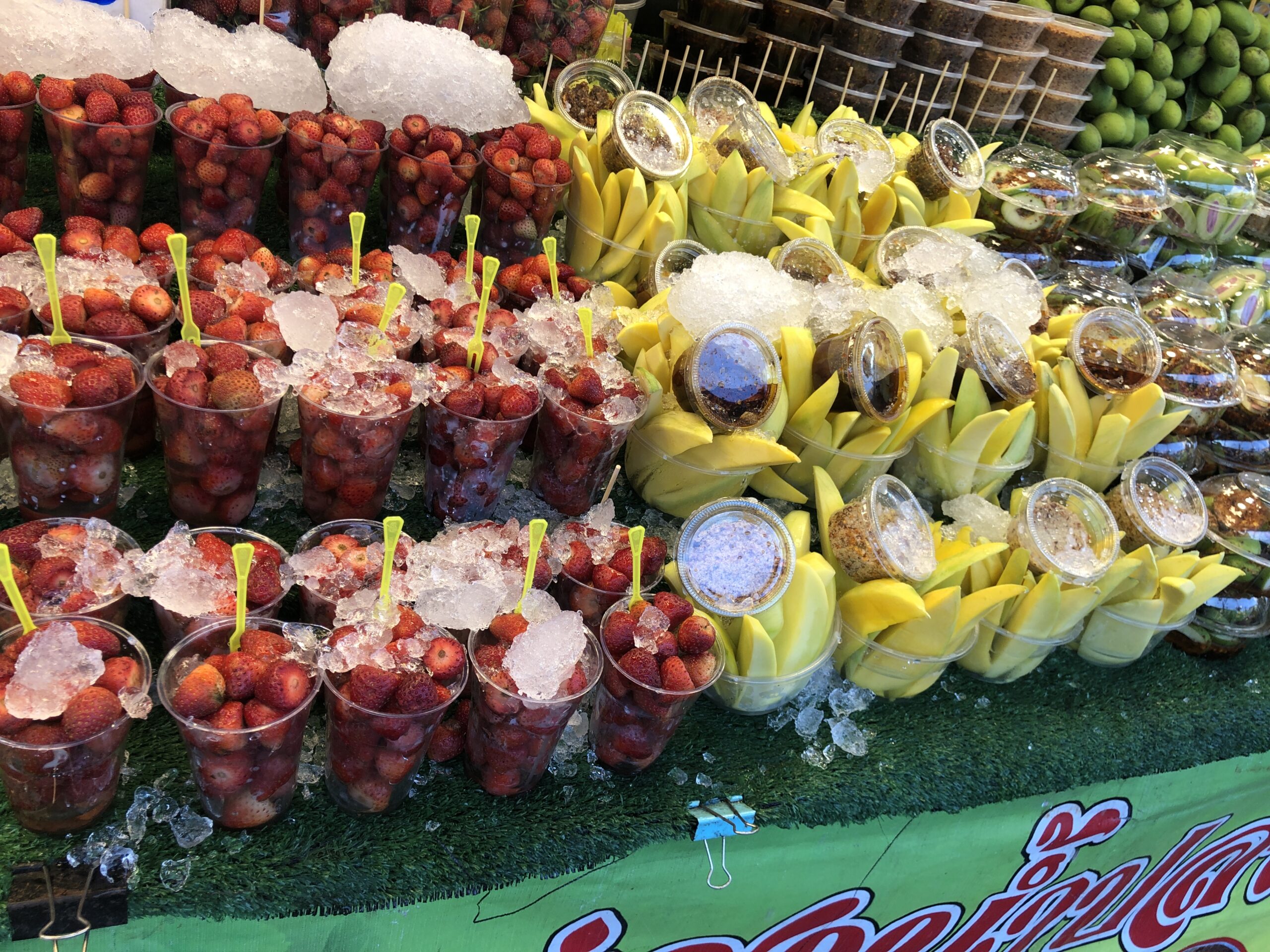
- Tropical fruits piled high
- Charcoal-grilled fish
- Coconut desserts
- Bowls of fresh noodles
Floating markets like Damnoen Saduak Floating Market still preserve echoes of this older food economy — a reminder that Thailand’s first street food culture did not begin on roads at all.
It floated.
Chinese migration changed everything
One of the most transformative chapters in Thai street food history arrived with Chinese immigration.
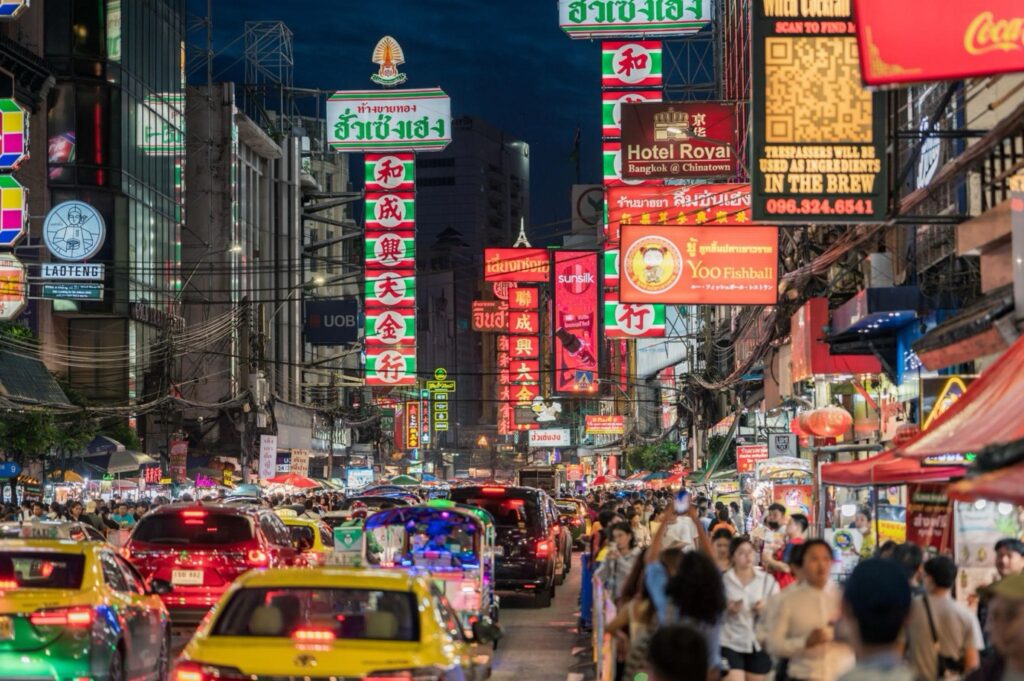
During the 19th century, thousands of migrants from southern China settled across Thailand, many establishing communities in Bangkok’s growing trading quarters, particularly around Yaowarat Road.
They brought with them far more than ingredients.
They introduced entirely new ways of cooking, eating, and selling food to the streets.
From these communities came:
- Stir-frying over intense heat
- Noodle-making traditions
- Portable street vending culture
- Dumplings and steamed snacks
- Roasted meats hanging in shopfronts
- Rice porridge breakfasts served to workers at dawn
Over time, these influences blended into Thai daily life so deeply that many dishes now seen as unmistakably Thai trace their roots back to Chinese migration.
Dishes like:
- Jok (rice porridge or congee)
- Kuay Teow (Thai rice noodle dishes)
- Khao Na Pet (roast duck rice)
- Moo Ping (grilled pork)
all carry echoes of this cultural exchange.
Even today, Yaowarat Road remains one of Thailand’s most iconic street food districts — a living reminder of how migration helped shape the flavour of modern Thailand.
Urban growth created demand for fast food
As Bangkok rapidly modernized in the late 19th and early 20th centuries, the rhythm of daily life began to change.
More people migrated into the city.
Factory workers and labourers spent longer hours away from home.
Crowded urban housing left many families with little space — or time — to cook.
Street vendors quickly became more than a convenience.
They became essential to city life.
For thousands of workers, roadside stalls replaced the home kitchen, offering meals that were fast, affordable, and filling.
Street food evolved into a kind of urban infrastructure:
quick to serve, cheap to buy, and dependable enough to feed an entire growing city.
In many ways, it functioned much like today’s food delivery economy — except the engines were charcoal fires, steel woks, and wooden push carts rolling through Bangkok’s streets.
World War II accidentally created Pad Thai’s rise
This is where Thai street food history gets especially fascinating.
During World War II, Thailand faced economic pressure and rice shortages.
At the time, Prime Minister Plaek Phibunsongkhram launched a campaign to modernize Thailand while promoting nationalism. Part of that campaign involved reducing domestic rice consumption and encouraging people to eat rice noodles instead.
But Pad Thai’s story wasn’t created entirely inside government offices.
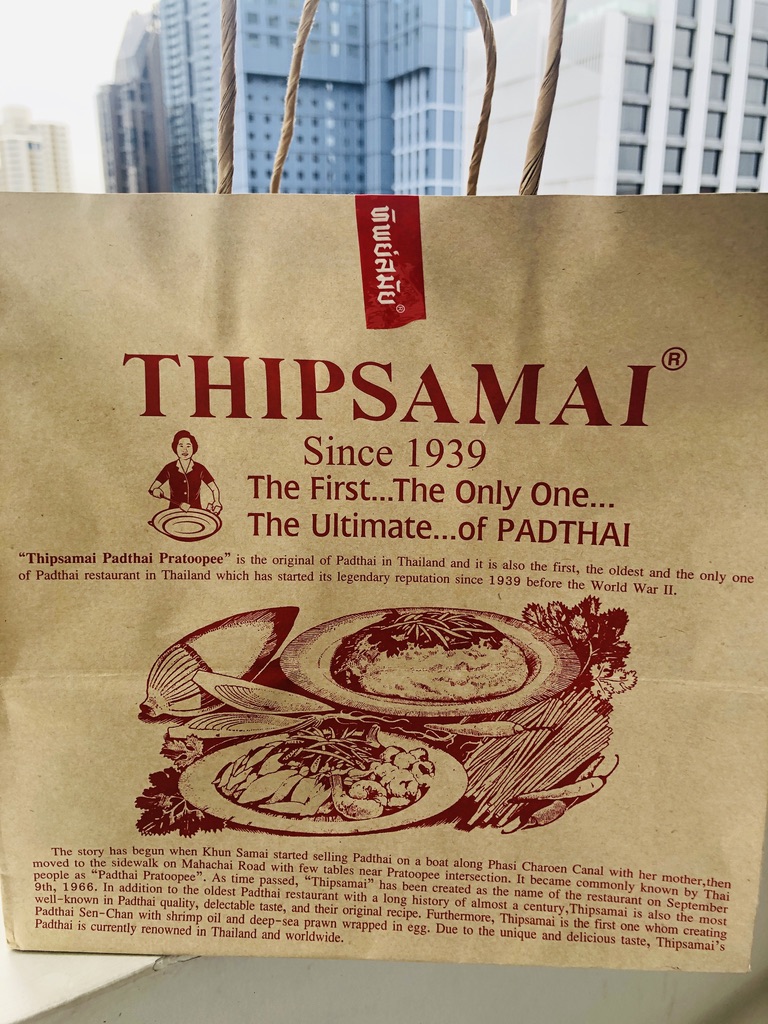
According to popular culinary history, one of the earliest versions of modern Pad Thai was sold by a street vendor named Mrs. Samai Baisamut, who operated along Bangkok’s canal networks—back when waterways were still central to daily life in Bangkok.
Her stir-fried noodle dish reportedly became popular among locals for being:
- Affordable
- Filling
- Quick to prepare
- Easy to eat on the go
As the story goes, the dish eventually caught the attention of Prime Minister Plaek Phibunsongkhram, who praised it as an ideal national dish during his modernization campaign.
Why did it fit perfectly?
- It used noodles instead of large quantities of rice
- It was cheap for working-class citizens
- It could be sold easily by street vendors
- It helped create a unified national food identity
The government actively promoted Pad Thai through public campaigns, recipe standardization, and street-side distribution.
What began as a practical canal-side meal sold by Mrs. Samai Baisamut along Bangkok’s canals eventually evolved into Thailand’s most globally recognized street food. Her version of Pad Thai became so influential that it later grew into the Michelin guide recognised Thipsamai restaurants, now considered one of the country’s most iconic destinations for Pad Thai across Bangkok.
And today?
Many tourists think Pad Thai is an ancient royal recipe.
In reality, it was shaped by war, street vendors, urban life, and political ambition.
That makes it far more interesting than the simplified version most people hear.
Tourism transformed street food into global fame
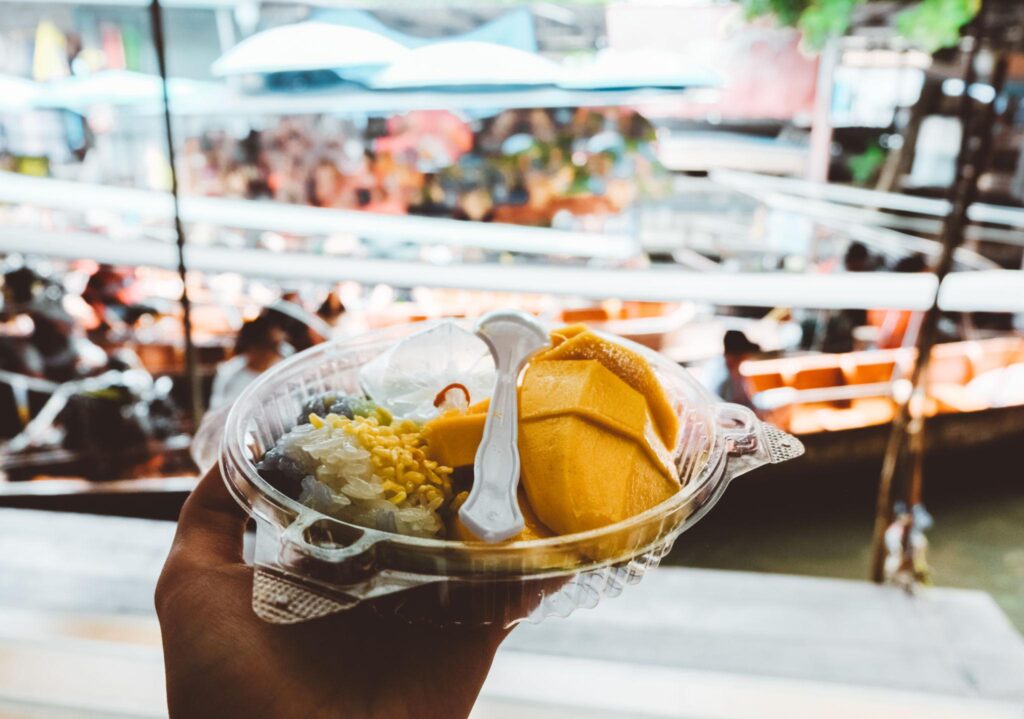
By the late 20th century, Thailand’s tourism boom had transformed roadside eating into an international obsession.
Backpackers and travellers poured into cities and islands like Bangkok, Chiang Mai, Phuket, and Koh Samui searching for the flavours they had heard whispered about in guidebooks and travel stories.
Soon, television hosts, food documentaries, Instagram feeds, and YouTube vlogs turned Thai street food into a global spectacle.
Night markets grew larger.
Street stalls became destinations.
Certain dishes evolved into must-eat tourist icons.
But beyond the famous bowls of Pad Thai and mango sticky rice, locals continued eating an entire universe of everyday dishes that many visitors never noticed.
Street food now lived two lives at once:
a daily livelihood feeding millions of Thai people — and a worldwide performance consumed through cameras, travel shows, and social media.

Modern crackdowns and survival
In recent years, Bangkok’s street food culture has faced growing pressure from modernization and regulation.
City authorities introduced efforts to reduce informal street vending across parts of the capital, citing concerns such as:
- Sidewalk congestion
- Sanitation standards
- Traffic flow and urban planning
Areas like Khao San Road and several districts in central Bangkok saw waves of restrictions and vendor removals.
Yet despite repeated crackdowns, street food continues to endure.
Because the demand for it never truly disappears.
For locals, it remains one of the most practical and affordable ways to eat every day.
For travellers, it offers a gateway into Thai culture far beyond restaurant walls.
And for countless vendors, those small carts and sizzling woks still represent something even more important: survival.
Why Thai street food matters
Thai street food is more than something delicious to eat.
It is a living story of migration, adaptation, political change, urban expansion, global tourism, and economic resilience woven into everyday life.
Behind every sizzling wok and crowded roadside stall lies generations of movement, survival, and reinvention.
Every bowl of noodles served on a Bangkok sidewalk carries far more than flavour.
It carries history.
Final Bite from The Curious Wok
Thai street food didn’t emerge from a perfect culinary tradition frozen in time.
Thai street food was never a perfect tradition preserved unchanged through time.
It evolved because people migrated.
Because cities expanded faster than kitchens could.
Because governments shaped what people ate.
Because vendors adapted to survive.
And because ordinary workers needed meals they could afford at the end of a long day.
That is what makes Thai street food so remarkable.
Not just its flavour — but its resilience.
So the next time you sit on a plastic stool eating Pad Thai beneath the chaos of Bangkok, remember:
You are not just eating street food.
You are tasting history.
— The Curious Wok