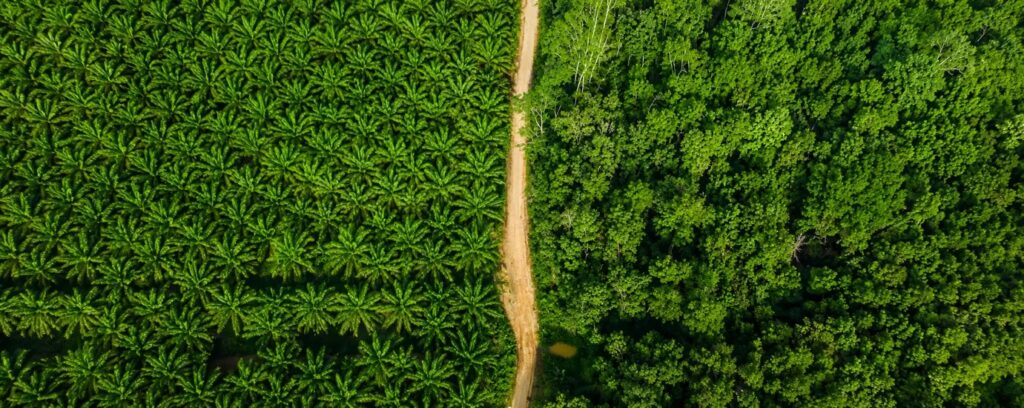
Few food ingredients have a reputation quite as complicated as palm oil.
It has been blamed for clogged arteries, deforestation and disappearing rainforests. At the same time, it has been praised for being an efficient oil crop, a versatile cooking fat and an important ingredient in affordable food products.
So which is it?
Villain or hero?
As usual, the answer isn’t quite that simple.
Palm oil sits at an interesting intersection of food science, nutrition, agriculture, economics and environmental sustainability.
Let’s separate the myths from the facts.
First, what exactly is palm oil?
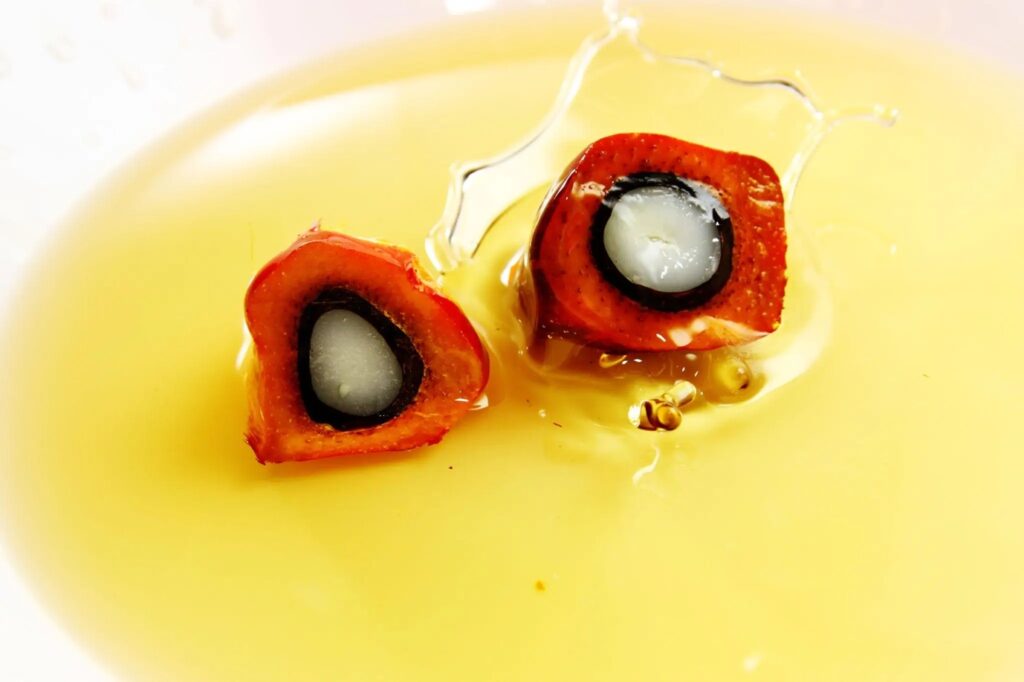
Palm oil comes from the fleshy fruit of the oil palm tree (Elaeis guineensis), a tropical plant native to West Africa that is now extensively cultivated, particularly in Southeast Asia.
And there are actually two different oils that are often confused:
Palm oil is extracted from the fleshy fruit.
Palm kernel oil comes from the seed or kernel.
They have different fatty-acid compositions and different food applications, so they shouldn’t simply be treated as the same ingredient.
Palm oil contains both saturated and unsaturated fatty acids and is naturally semi-solid at room temperature. Its composition and physical properties make it useful in frying as well as in products such as biscuits, spreads, confectionery, instant noodles and other processed foods.
Its stability and texture are part of the reason the food industry likes it.
But usefulness doesn’t automatically make an ingredient healthy—or environmentally harmless.
Myth #1: Palm oil is basically the same as trans-fat.
Not at all.
Palm oil is not a trans-fat.
Trans fats are a different category of fatty acids and, historically, large amounts of industrial trans fats were created through the partial hydrogenation of vegetable oils.
Palm oil does not need to be partially hydrogenated to provide a semi-solid fat for many food applications.
This distinction became particularly important as food manufacturers moved away from partially hydrogenated fats.
But here’s the important qualification:
“Not a trans-fat” does not mean “health food.”
Palm oil is relatively high in saturated fat, and the type of fat we consume matters for cardiovascular health. WHO recommends that saturated fat make up no more than 10% of total energy intake and advises replacing saturated fats with unsaturated fats where possible.
Myth #2: Palm oil is unhealthy.
The answer depends on what you’re comparing it with.
Palm oil contains a substantial amount of saturated fat, including palmitic acid.
That matters because diets high in saturated fat can raise LDL cholesterol, and replacing saturated fat with unsaturated fat is generally considered a healthier dietary strategy.
WHO specifically identifies palm oil among sources of saturated fat and recommends that dietary fat should come primarily from unsaturated fatty acids.
But there’s another important question:
What food is the palm oil actually in?
A small amount of palm oil in one food doesn’t tell us much about someone’s overall diet.
If palm oil appears in a biscuit, wafer, instant noodle or confectionery product, there may be other nutritional considerations too—such as added sugar, sodium, fibre and overall energy density.
So rather than declaring:
“Palm oil = unhealthy,”
it’s more useful to ask:
How much are you consuming, how often, and what is it replacing?
Myth #3: “Vegetable oil” automatically means healthier.
The word “vegetable” doesn’t tell us enough.
Olive oil, sunflower oil, soybean oil, mustard oil, canola oil, coconut oil and palm oil are all plant-derived fats.
But they have very different fatty-acid profiles.
The important distinction isn’t simply:
Plant = good
Animal = bad
It is more nuanced than that.
For cardiovascular health, the quality of dietary fat matters, and WHO recommends favouring unsaturated fats over saturated fats.
So when choosing a cooking oil, don’t stop at the word vegetable.
Look at the actual oil.
Myth #4: Palm oil is terrible for the environment.
This is where the story gets complicated.
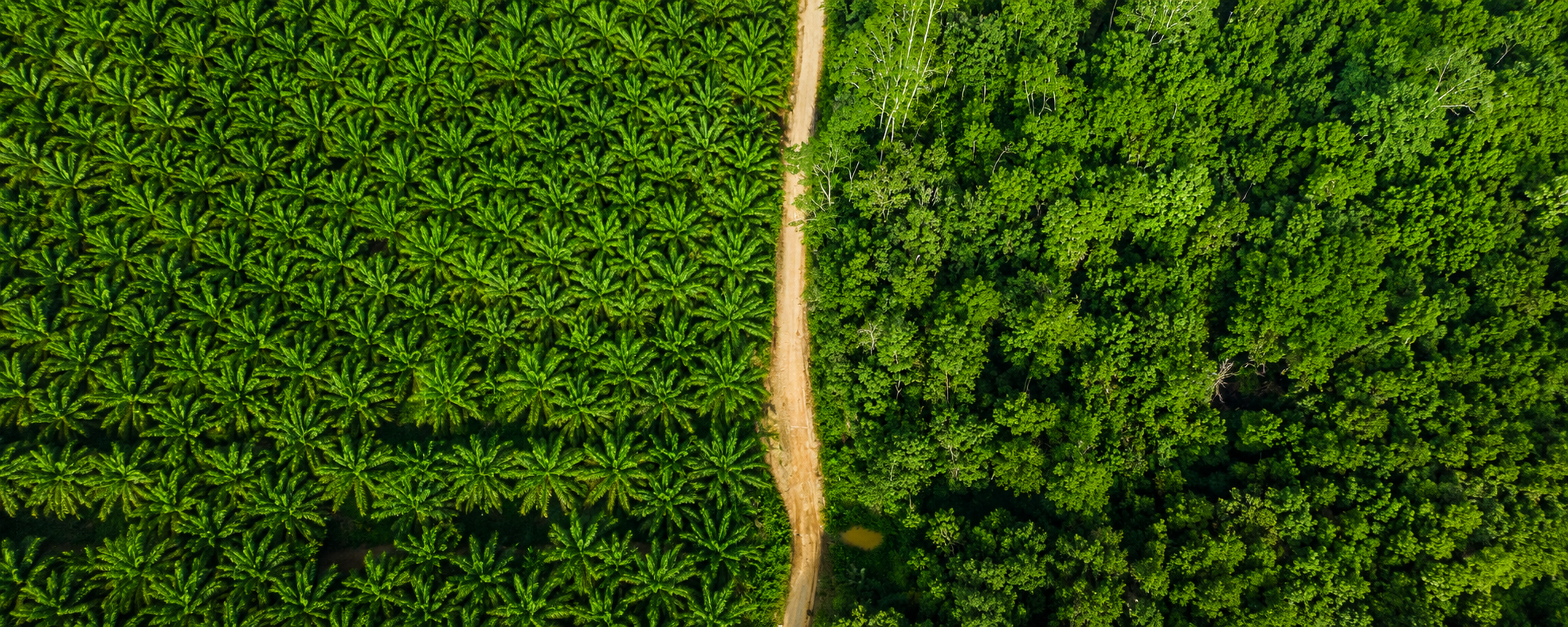
Palm oil production has been associated with serious environmental problems, particularly when plantations expand into primary forests, peatlands and other ecologically important areas.
Deforestation can destroy habitats, reduce biodiversity and release significant amounts of greenhouse gases, especially where carbon-rich peatlands are cleared and drained.
Those concerns are very real.
But there’s another part of the story that often gets overlooked:
Oil palm is an extremely productive crop.
According to a recent IUCN assessment, oil palm can produce more than five tonnes of oil per hectare in some production systems, while many other major oil crops average less than two tonnes per hectare.
That creates an important food-system dilemma.
Imagine we need the same amount of vegetable oil.
If one crop produces much more oil from each hectare, replacing it entirely with a lower-yielding crop could require substantially more agricultural land.
So the environmental question isn’t simply:
“Palm oil or no palm oil?”
It is:
“How do we produce the vegetable oils the world needs without destroying ecosystems?”
Myth #5: The only responsible choice is to avoid palm oil completely.
Not necessarily.
Avoiding palm oil may seem like the simplest environmental solution.
But replacing one crop with another doesn’t automatically eliminate the environmental problem.
If another vegetable oil requires substantially more land to produce the same amount of oil, the environmental consequences of that land demand need to be considered too.
A more useful approach is to ask:
Where did the palm oil come from?
Was it produced on land that was previously forest?
Was peatland cleared or drained?
Are producers improving yields on existing plantations?
Are forests and high-value ecosystems being protected?
Are workers and local communities being treated fairly?
These questions move the conversation from:
“Palm oil is bad.”
to:
“Palm oil needs to be produced responsibly.”
And that is a much more useful conversation.
Myth #6: Sustainable palm oil means the problem is solved.
Not quite.
Certification and sustainability standards can help improve production practices, but they are not a magic wand.
Sustainable palm-oil systems aim to address issues such as deforestation, greenhouse-gas emissions, labour conditions and land conflicts.
However, research on smallholder sustainability has also identified limitations in certification and significant gaps in implementation.
So certification can be one tool, but transparency, traceability, enforcement and better agricultural practices matter too.
In other words:
A certification logo is a starting point—not the end of the conversation.
So, is palm oil a hero?
It has some genuinely impressive characteristics.
🌴 Extremely productive
Oil palm can produce large quantities of oil from relatively little land compared with many other oil crops.
🔥 Useful in food production
Its physical properties make it useful for frying and for creating texture and stability in processed foods.
🥐 Functional
Its semi-solid nature can provide structure in foods where liquid oils may not perform in the same way.
💰 Economically important
Palm oil is an important global agricultural commodity and supports the livelihoods of millions of people across producing regions.
🌱 Potential for improvement
Research indicates that there is significant scope to improve yields on existing plantations, potentially reducing pressure for further expansion.
And is palm oil a villain?
It certainly can be part of a problematic system.
🌳 Deforestation
Poorly planned plantation expansion can result in forest loss and habitat destruction.
🔥 Peatland degradation
Clearing and draining tropical peatlands can produce significant greenhouse-gas emissions and increase fire risk.
🦧 Biodiversity loss
Conversion of natural ecosystems into monoculture plantations can dramatically alter habitats.
❤️ High saturated-fat content
From a nutritional perspective, palm oil is not the preferred fat when the alternative is an oil rich in unsaturated fatty acids.
🍪 Often present in highly processed foods
Palm oil itself doesn’t determine whether a food is healthy or unhealthy. But many palm-oil-containing products are foods that are best consumed in moderation as part of an overall balanced diet.
How to Spot Palm Oil on a Food Label
Palm oil isn’t always as obvious as you might expect.
You may see ingredients such as:
- Palm oil
- Palm kernel oil
- Palm olein
- Palm stearin
- Palm fat
- Vegetable fat
- Vegetable oil
The exact terminology depends on the product and applicable food-labelling rules.
And remember:
Palm oil ≠ palm kernel oil
Palm oil comes from the fleshy fruit.
Palm kernel oil comes from the seed.
They have different compositions and properties.
Should you avoid a food simply because it contains palm oil?
Not necessarily.
Instead, look at the whole label.
1. What kind of food is it?
A minimally processed food cooked with a little oil is a very different proposition from a highly processed snack.
2. How much saturated fat does it contain?
The nutrition panel gives you more useful information about the food’s saturated-fat contribution than simply seeing the words palm oil in the ingredients list.
3. How often are you eating it?
An occasional biscuit is different from eating several servings of highly processed snacks every day.
4. Is the producer transparent about sourcing?
If environmental sustainability matters to you, look for companies that disclose their palm-oil sourcing policies and demonstrate credible traceability and responsible-sourcing practices.
The ingredient list tells you:
What’s in the food.
The nutrition panel tells you:
What the food contributes to your diet.
And neither tells the entire environmental story.
For that, you need to look beyond the packet.
PALM OIL: QUICK-FIRE MYTHS
| Myth | Truth |
| Palm oil = trans fat | ❌ Palm oil is not a trans fat |
| Palm oil is toxic | ❌ No, but it is relatively high in saturated fat |
| All vegetable oils are healthier | ❌ Fat composition matters |
| Palm oil is the worst crop for the planet | ❌ Its environmental impact can be severe, but its high yield per hectare complicates the comparison |
| Avoiding palm oil solves deforestation | ❌ Replacing it with another oil crop can require more land |
| Sustainable palm oil is possible | ✅ Better production and sourcing practices can reduce environmental damage |
The Curious Wok Verdict
So, villain or hero?
Neither.
Palm oil is a remarkably productive agricultural crop with useful food-science properties.
It is also a crop whose expansion has, in some places and under some production systems, contributed to serious environmental damage.
From a nutrition perspective, it isn’t a poison.
But it isn’t a nutritional superhero either.
Its relatively high saturated-fat content means that, where practical, replacing saturated fats with unsaturated fats is generally the healthier direction.
And from an environmental perspective, simply saying “no palm oil” doesn’t automatically solve the problem.
The bigger lesson is that ingredients don’t exist in isolation.
When judging a food, think about:
Nutrition + quantity + food context + production + environmental impact.
Instead of asking:
“Is palm oil good or bad?”
Ask:
“How much are we consuming, what is it replacing, and how was it produced?”
Because food science rarely deals in heroes and villains.
It deals in trade-offs.
And palm oil is a particularly good example of why the most interesting food stories are rarely black and white.
Sources & Further Reading
- World Health Organization (WHO) — Saturated fatty acid and trans-fatty acid intake for adults and children. WHO recommends limiting saturated fat to no more than 10% of total energy intake and favouring unsaturated fats.
- World Health Organization (WHO) — Healthy diet. WHO identifies palm oil among sources of saturated fat and recommends that unsaturated fats be preferred to saturated fats.
- IUCN — Exploring the Future of Vegetable Oils. The report examines oil-crop yields, land requirements and the environmental trade-offs involved in vegetable-oil production.
- Woittiez et al., European Journal of Agronomy — Yield gaps in oil palm: A quantitative review of contributing factors. The review examines oil-palm productivity and the potential to increase yields without necessarily expanding cultivated area.
- Land Use Policy — Review of smallholder palm oil sustainability reveals limited positive impacts and identifies key implementation and knowledge gaps. A useful review of the opportunities and limitations surrounding sustainability certification and smallholder production.