Why Do Restaurant Noodles Always Taste Better?
You’ve followed the recipe.
You’ve bought the same noodles.
You’ve added garlic, chilli, vegetables and soy sauce.
And yet…
Your chilli garlic noodles still don’t taste like the ones from your favourite Chinese restaurant.
They’re perfectly edible, sometimes even delicious—but they’re missing something.
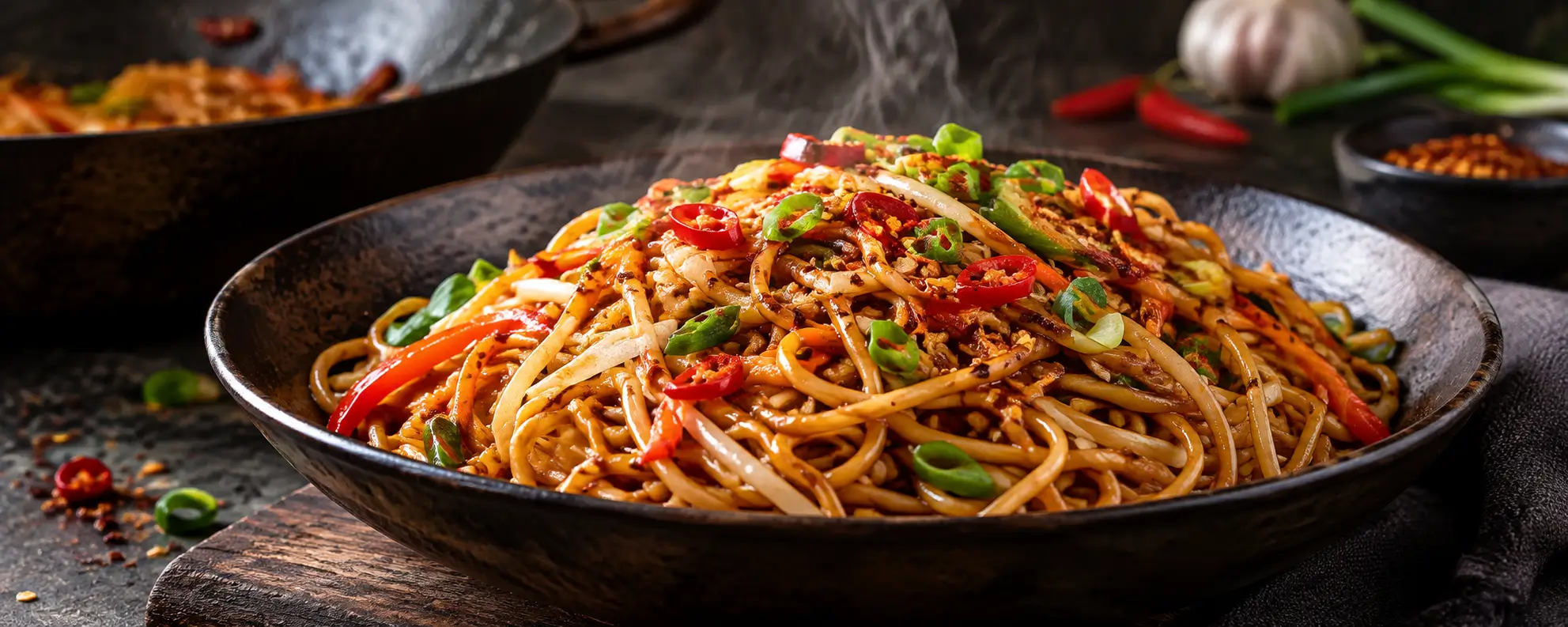
That smoky aroma. That glossy coating. The slight char on the noodles. The crunch of vegetables. That deep, savoury flavour that seems to come from nowhere.
So what’s the restaurant secret?
Here’s the thing: there probably isn’t one.
You don’t need a mysterious sauce or a pantry full of exotic ingredients. And while MSG can certainly contribute to savouriness, it isn’t what makes great noodles great.
The real magic happens in the wok.
Heat. Timing. Texture. Balance.
Four simple principles that make the difference between noodles that are merely tossed together and noodles that actually taste wok-fried.
And the good news?
You can recreate most of that magic in your own kitchen.
What Makes Restaurant-Style Noodles Different?
So, what actually makes restaurant noodles taste different?
Heat. And plenty of it.
Watch a busy Chinese restaurant kitchen and you’ll notice that the wok is rarely sitting around waiting for the ingredients. It’s already hot—really hot—before anything goes in.
That’s important because stir-frying isn’t slow cooking. Ingredients hit the hot wok, sizzle almost instantly and are tossed rapidly over high heat.
Garlic becomes intensely aromatic without having time to burn. Vegetables cook quickly while holding on to their crunch. And the sauce clings to the noodles, creating that glossy coating instead of collecting in a puddle at the bottom of the wok.
This is also where wok hei comes into play—the smoky, slightly charred aroma and flavour that can develop when food is cooked rapidly in a very hot wok.
Now for the good news.
You don’t need a commercial Chinese restaurant burner to make great noodles at home.
Your home stove can get you surprisingly close if you work with the heat rather than against it.
A few simple rules make a big difference:
- Preheat the wok properly. Don’t add ingredients to a lukewarm wok.
- Cook in manageable batches. Too much food drops the temperature and causes steaming instead of stir-frying.
- Have everything ready before you start. Once the wok is hot, there’s no time to start chopping garlic.
- Keep the noodles slightly undercooked. They’ll finish cooking in the wok.
- Use just enough sauce. You want the noodles glossy and well-seasoned, not swimming in liquid.
- Work quickly. High-heat stir-frying is all about timing.
You may not be able to reproduce the exact heat of a restaurant wok burner, but you can reproduce the technique.
And that’s what matters.
The Curious Wok Tip
Your wok should be hot before the aromatics go in—not the other way around.
A cold wok gives you steamed noodles.
A properly heated wok gives you stir-fried noodles.
The Ingredients
Great chilli garlic noodles don’t need a long ingredient list. What matters is choosing the right ingredients—and, more importantly, understanding what each one brings to the wok.
For the Noodles
- 200 g noodles — Hakka, egg or wheat noodles
- 1 tbsp neutral cooking oil — for tossing the cooked noodles and preventing them from sticking
- 1 tsp sesame oil — for finishing and adding that characteristic nutty aroma
The Curious Wok Tip: Choose noodles with a firm, springy texture. They should be able to withstand a few minutes of high-heat stir-frying without turning soft or breaking.
For the Chilli-Garlic Base
This is where the personality of the dish comes from.
- 1½ tbsp garlic, finely chopped
- 1–2 fresh red chillies, finely chopped
- 1 tsp chilli flakes
- 1 tsp ginger, finely chopped
- 2 spring onions, whites and greens separated
The garlic provides the savoury aromatic backbone, while fresh chilli and chilli flakes bring two different kinds of heat. Ginger adds warmth and the spring onion whites add another layer of freshness and aroma.
For the Vegetables
Keep the vegetables simple. The goal is colour, crunch and texture, rather than turning the noodles into a vegetable stir-fry.
- ½ cup cabbage, finely shredded
- ¼ cup carrot, julienned
- ¼ cup capsicum, thinly sliced
- ¼ cup spring onion, sliced
- Optional: Bean sprouts, mushrooms or baby corn
Cut everything into thin, relatively uniform pieces so the vegetables cook quickly and evenly.
For the Sauce
The sauce is deliberately restrained. It should season the noodles, not overpower them.
- 1 tbsp light soy sauce — for umami
- 1 tsp dark soy sauce — mainly for colour and depth
- 1 tsp rice vinegar — for a little acidity
- 1 tsp chilli sauce — for the heat
- ½ tsp sugar — to balance the heat and salt
- ½ tsp white pepper
- Salt, only if required
Optional Finishing Touches
These aren’t essential, but they can add another layer of flavour and texture.
- ½ tsp MSG — for umaminess
- Toasted sesame seeds — for crunch
- Crispy fried garlic — for extra garlic flavour and texture
- Extra spring onion greens — for freshness
Remember: the goal isn’t to make the sauce louder. It’s to make every element work together—garlic, chilli, savouriness, acidity, heat and the noodles themselves.
Step 1: Cook the Noodles Properly
Before the wok even gets involved, there is one thing you need to get right:
The noodles.
This is where many homemade stir-fried noodles go wrong. Cook them for too long and they turn soft and sticky. Cook them correctly, and they stay firm, springy and ready for the wok.
Cook the noodles according to the packet instructions, but take them off the heat slightly before they’re fully cooked.
You’re looking for noodles that are tender but still have a little bite. Remember, they’re going back into the wok, where they’ll cook for another couple of minutes.
Once they’re done, drain them immediately.
Give them a quick rinse under cold water to stop the cooking and remove excess surface starch. Then toss them with a small amount of neutral oil to prevent sticking.
Don’t leave the noodles sitting in a hot, tangled heap. If you have the space, spread them out on a tray or large plate so they cool quickly and remain separate.
Why This Matters
The wok is going to finish cooking the noodles.
If you start with noodles that are already completely soft, they’ll have nowhere to go but softer. By the time the vegetables are cooked and the sauce has coated everything, you’ll end up with broken, mushy noodles instead of the firm, springy texture we’re after.
Think of boiling as preparing the noodles for the wok, not finishing them.
Aim for roughly 80–90% doneness in the pot.
The wok finishes the job.
The Curious Wok Tip
When in doubt, undercook the noodles slightly.
You can always cook them a little more in the wok. You can’t bring back the bite once they’ve turned mushy.
Step 2: Make the Sauce Before You Start Cooking
Here’s a simple restaurant-kitchen habit worth stealing for your home kitchen:
Make the sauce before you turn on the heat.
Once the wok gets hot, everything happens quickly. There is no time to measure soy sauce, search for the chilli sauce or start looking for the vinegar while your garlic is already sizzling.
Mix together:
- Light soy sauce
- Dark soy sauce
- Rice vinegar
- Chilli sauce
- Sugar
- White pepper
- MSG, if using
Give it a quick stir and keep it within arm’s reach of the stove.
This isn’t just about convenience. Having everything measured and ready means you can focus on heat, timing and movement once the cooking starts.
That’s the whole idea behind mise en place—everything in its place before you begin.
Step 3: Get Your Wok Smoking Hot
Now the real cooking begins.
Place your wok over high heat and give it enough time to heat up properly. Don’t rush this step—the wok needs to be hot before the ingredients go in.
Add the oil and swirl it around to coat the cooking surface.
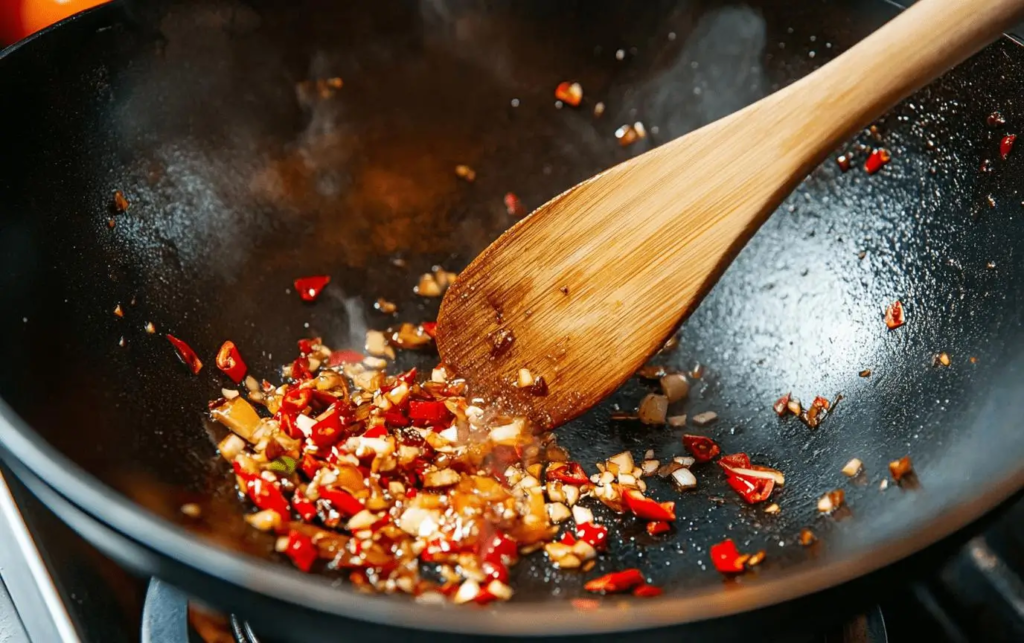
Then add the garlic, ginger, fresh chilli and spring onion whites.
You should hear an immediate sizzle.
Stir-fry the aromatics quickly, just until they’re intensely fragrant. You’re looking for the moment when the garlic releases its aroma and the chilli starts to perfume the oil.
But don’t let the garlic brown.
Garlic has a very small window between fragrant and burnt.
Once it starts turning golden, it can quickly become bitter and overpower everything else in the wok.
This is one of those moments when your nose is a better timer than your clock.
The moment the aromatics smell irresistible, it’s time for the next ingredient.
Step 4: Add the Vegetables
Now it’s time to bring in the vegetables.
Add them in quick succession, starting with the ones that need a little more time to cook—such as carrots or baby corn.
Follow with the cabbage and capsicum.
Keep everything moving across the hot wok. You want the vegetables to cook quickly while still retaining their natural crunch.
You’re not looking for soft, fully cooked vegetables.
The ideal restaurant-style texture is somewhere in between:
Hot. Cooked. Crisp.
This is where the high heat really earns its place.
Because the vegetables cook quickly, they retain more of their texture and release less water into the wok. That means you get beautifully crisp vegetables instead of a watery stir-fry.
The Curious Wok Tip
Don’t cook vegetables until they’re done.
Cook them until they’re just right—because they’ll continue cooking when the noodles and sauce join the wok.
Step 5: Add the Noodles
Now comes the moment we’ve been building towards.
The noodles go in.
Add the cooked noodles to the hot wok and resist the temptation to start stirring immediately. Give them a few seconds to make contact with the hot surface.
That brief pause allows some of the noodles to develop a little colour and char before you start tossing.
Now comes the sauce.
Instead of pouring it directly over the noodles, drizzle it around the sides of the hot wok. As it hits the heated surface, it will sizzle and release its aroma before making its way into the noodles.
Then toss everything together quickly.
Keep the noodles moving, making sure the sauce coats every strand and the vegetables are evenly distributed.
You want glossy noodles, crisp vegetables and just enough char to give the dish that unmistakable wok-fried character.
The Curious Wok Tip
Don’t stir endlessly.
Let the wok do some of the work.
A few seconds of contact with the hot surface can give your noodles more flavour than a minute of constant stirring.
Step 6: Finish With Heat and Aroma
You’re almost there.
Once the noodles are evenly coated and the vegetables are still crisp, it’s time for the final touches.
Add:
- Spring onion greens
- 1 tsp sesame oil
- A little extra fresh chilli, if you want more heat
Give everything 2–3 final lifts and folds to distribute the finishing ingredients. Then take the wok off the heat.
Now taste.
This is your last chance to adjust the balance—and this is where restraint matters.
Does it need a little more soy sauce for salt and savouriness?
A small splash of rice vinegar for brightness?
Perhaps another pinch of chilli for heat?
Make small adjustments rather than reaching for another generous pour of sauce.
Remember, the noodles have already been seasoned. You’re fine-tuning, not rebuilding the dish.
Good chilli garlic noodles should taste of noodles, garlic and chilli, with the savoury depth of the sauces sitting in the background—not the other way around.
When every flavour is present but nothing dominates, you know you’ve got it right.
The Secret to That Restaurant Flavour
So, what separates good homemade noodles from the kind that makes you wonder how the restaurant does it?
Often, it’s not one big secret.
It’s a handful of small details that add up to a big difference.
1. Don’t Overcrowd the Wok
This is one of the most important rules of stir-frying.
Put too many noodles and vegetables into the wok at once and the temperature drops rapidly. Instead of getting that quick, high-heat sear we’re after, the ingredients start releasing moisture and steaming in their own juices.
For a typical home stove, 200 g of noodles is a comfortable batch.
Cooking for four? Don’t simply double everything and hope for the best.
Cook in two batches.
It may take a few extra minutes, but you’ll get much better colour, texture and wok flavour.
2. Keep the Noodles Dry
Here’s a simple equation to remember:
Wet noodles + hot wok = steam.
And steam is not what we’re looking for.
Drain the noodles thoroughly after rinsing and let excess water run off before they go into the wok. The drier the surface, the better the noodles can make contact with the hot wok and develop that slightly charred, wok-fried character.
3. Don’t Drown Them in Sauce
This is probably the most common mistake when making stir-fried noodles at home.
It’s tempting to think that more sauce means more flavour.
It doesn’t.
Too much liquid makes the noodles heavy, overly salty and soggy, while masking the flavour of the garlic, chilli and vegetables.
The sauce should coat the noodles—not pool around them.
Restaurant-style noodles are glossy, seasoned and flavourful.
Not swimming.
4. Be Generous With Garlic—but Careful With It
The dish is called chilli garlic noodles for a reason.
Don’t be afraid of the garlic.
But remember that finely chopped garlic cooks very quickly, especially in a screaming-hot wok.
Add it to the hot oil, keep it moving and cook it only until intensely fragrant.
You’re looking for aroma, sweetness and depth.
Not burnt, bitter garlic.
5. MSG Is Optional
MSG can add another layer of umami and savouriness, and a small amount can help give noodles that familiar restaurant-style depth.
But it isn’t a magic ingredient.
It won’t rescue overcooked noodles, a cold wok or an overly salty sauce.
If you use MSG, a little goes a long way.
And if you don’t use it, you can still make deeply flavourful, restaurant-style noodles.
The Curious Wok Take
There isn’t one secret ingredient that transforms homemade noodles into restaurant noodles.
It’s the combination of heat, moisture, timing, seasoning and technique.
Get those right, and even a simple bowl of noodles can taste remarkably close to the real thing.
Can You Make These Without a Wok?
Absolutely.
A wok is ideal for stir-frying because its shape makes it easy to move ingredients between the hottest part of the pan and the cooler sides. But you don’t need one to make excellent chilli garlic noodles at home.
A large, heavy-bottomed frying pan or skillet will work perfectly well.
The two things that matter most are surface area and heat.
Choose a pan that’s wide enough to spread the noodles out rather than piling them into a deep mound. A small, crowded pan will lose heat quickly, leaving you with steamed noodles instead of properly stir-fried ones.
And if you’re cooking a larger quantity, work in batches. It’s better to give the noodles enough room to make proper contact with the hot surface than to squeeze everything into one pan.
You may not achieve exactly the same level of wok hei as a commercial Chinese restaurant with a powerful wok burner—and that’s okay.
With a properly heated pan, dry noodles, high heat and quick cooking, you can still achieve beautifully aromatic noodles with crisp vegetables, a little char and plenty of wok-fried character.
Variations You Can Try
Once you’ve got the basic chilli garlic noodles technique down, you’ve essentially got a template for endless noodle combinations.
Keep the same principles—hot wok, dry noodles, quick cooking and balanced seasoning—and change the main ingredients to create your own version.
Chilli Garlic Chicken Noodles
Slice chicken breast or boneless thigh thinly and season lightly. Stir-fry it in the hot wok until just cooked, remove it, and set aside.
Continue with the aromatics and vegetables, then return the chicken with the noodles and sauce towards the end.
Chilli Garlic Prawn Noodles
Prawns cook quickly, so give them a brief sear in the hot wok until just cooked through.
Remove them before adding the aromatics and vegetables, then return the prawns during the final toss.
This keeps them juicy rather than rubbery.
Schezwan Noodles
For a more aggressive chilli kick, swap some or all of the fresh chilli for Schezwan chilli sauce.
Add it with the other sauce ingredients and adjust according to how spicy you like your noodles.
Burnt Garlic Noodles
If garlic is your favourite part of the dish, take it one step further.
Cook finely chopped garlic until deep golden and crisp, but be careful not to let it turn dark brown or bitter.
You can either use it as the main aromatic base or sprinkle some crispy garlic over the finished noodles for an extra layer of flavour and texture.
Egg Chilli Garlic Noodles
Add two lightly beaten eggs to the hot wok before the vegetables.
Let them set for a few seconds, then scramble them into soft curds. Push the egg to one side, add the aromatics and vegetables, and continue with the recipe.
The result is a comforting, protein-rich version with soft egg, crunchy vegetables and spicy, garlicky noodles.
Restaurant-Style Chilli Garlic Noodles
Serves: 2
Prep time: 15 minutes
Cooking time: 8–10 minutes
Ingredients
For the Noodles
- 200 g noodles — Hakka, egg or wheat
- 1 tbsp neutral cooking oil
- 1 tsp sesame oil
For the Aromatics
- 1½ tbsp garlic, finely chopped
- 1–2 fresh red chillies, finely chopped
- 1 tsp chilli flakes
- 1 tsp ginger, finely chopped
- 2 spring onions, whites and greens separated
For the Vegetables
- ½ cup cabbage, finely shredded
- ¼ cup carrot, julienned
- ¼ cup capsicum, thinly sliced
- Optional: Bean sprouts, mushrooms or baby corn
For the Sauce
- 1 tbsp light soy sauce
- 1 tsp dark soy sauce
- 1 tsp rice vinegar
- 1 tsp chilli sauce
- ½ tsp sugar
- ½ tsp white pepper
- ½ tsp MSG, optional
Method
1. Cook the Noodles
Cook the noodles according to the packet instructions, but stop when they’re slightly underdone.
Drain immediately, rinse briefly under cold water and drain thoroughly. Toss with a little neutral oil to prevent sticking.
2. Prepare the Sauce
Combine the light soy sauce, dark soy sauce, rice vinegar, chilli sauce, sugar, white pepper and MSG, if using.
Keep the sauce ready beside the stove.
3. Heat the Wok
Place a wok over high heat and allow it to become properly hot.
Add the neutral oil and swirl to coat the surface.
4. Cook the Aromatics
Add the garlic, ginger, fresh chilli, chilli flakes and spring onion whites.
Stir-fry quickly until intensely fragrant, being careful not to let the garlic brown or burn.
5. Stir-Fry the Vegetables
Add the carrots and any other vegetables that need slightly longer to cook.
Follow with the cabbage and capsicum.
Keep everything moving over high heat while maintaining a little crunch.
6. Add the Noodles
Add the cooked noodles and spread them across the wok.
Let them sit for 10–15 seconds to develop a little colour before lifting and folding them through the vegetables.
7. Add the Sauce
Drizzle the prepared sauce around the hot sides of the wok.
Let it sizzle briefly, then immediately lift and fold the noodles through the sauce.
Continue tossing for 30–60 seconds, keeping the noodles moving without constantly stirring them.
8. Finish
Add the spring onion greens and sesame oil.
Give the noodles 2–3 final lifts and folds, then remove the wok from the heat.
Taste and adjust the seasoning if necessary.
9. Serve Immediately
Transfer the noodles to serving bowls and enjoy them hot, glossy and straight from the wok.
The Curious Wok Take
The best chilli garlic noodles aren’t about adding more chilli, more soy sauce or more seasoning.
They’re about control.
Control the heat.
Control the moisture.
Control the timing.
And, perhaps most importantly, control the urge to add just one more splash of soy sauce.
Because restaurant-style cooking isn’t necessarily about complicated recipes or secret ingredients.
It’s about understanding what happens when heat, oil and time come together—and knowing when to let each one do its job.
Get those fundamentals right, and a humble bowl of noodles can develop the aroma, texture and flavour you’d expect from a busy Chinese restaurant kitchen.
That’s the real secret.
Cook hot. Cook fast. Keep it simple.