
There was a time when ordering food meant picking up the phone and calling your favourite restaurant. You knew the person taking your order, they knew your preferences, and sometimes the chef even knew exactly how you liked your food.
Today, ordering dinner is a matter of a few taps.
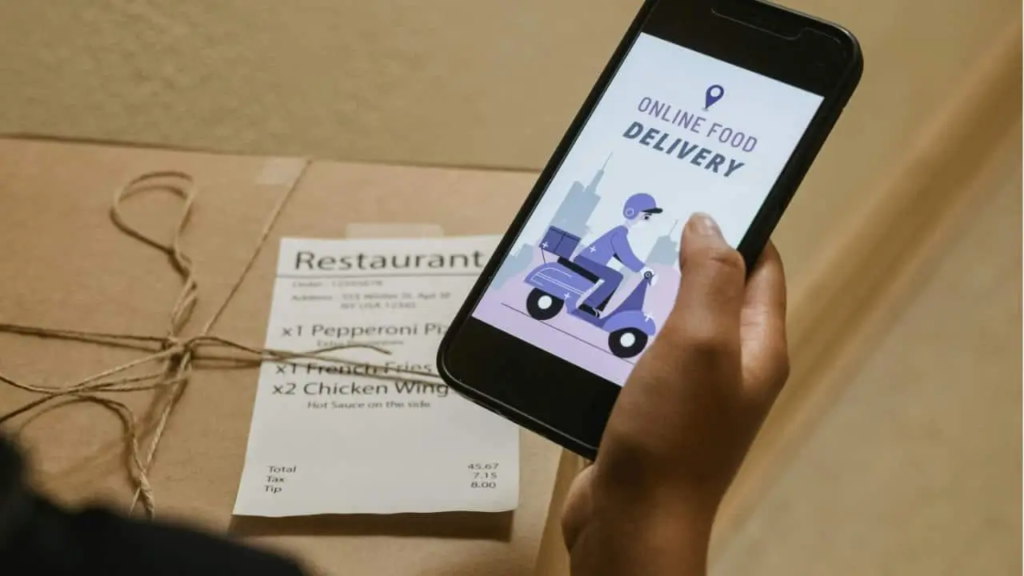
Food delivery aggregators have transformed the hospitality industry. They have made thousands of restaurants accessible to customers without requiring them to leave their homes. They have helped independent restaurants reach new audiences and given customers an incredible amount of choice.
There is no denying the convenience they offer.
But have we ever stopped to examine what this convenience actually costs?
More importantly, have we considered the difference between ordering directly from a restaurant and ordering through a third-party aggregator?
Because behind that seemingly simple transaction lies an interesting business model. One where the restaurant pays to access the customer, the customer pays to access the restaurant, and several additional charges get added along the way.
Let’s break it down.
1. Two ways to order, two very different economics
Imagine you want to order dinner from your favourite neighbourhood restaurant.
You have two options.
Option A: Order directly from the restaurant.
You call the restaurant, place your order, and the restaurant takes care of getting it delivered, either through its own delivery staff or a third-party logistics partner. The restaurant manages the entire process, from taking your order to ensuring it reaches you.
Option B: Order through a food delivery aggregator.
You open a food delivery app, search for the same restaurant, select the same dishes and place your order. The aggregator provides the platform, facilitates the transaction, processes the payment, and coordinates the delivery.
Both options get the food to your doorstep.
But the economics behind these two transactions are quite different.
When you order directly, the restaurant avoids the aggregator’s commission. It may still incur delivery, payment processing and marketing costs, but it retains greater control over the transaction.
When you order through an aggregator, the restaurant pays a commission for the platform’s services, in addition to meeting its own food preparation and operational expenses.
2. The Aggregator’s Commission: Necessary, But at What Cost?
Let’s look at this from the aggregator’s perspective first. Food delivery platforms are businesses, and like any other business, they need to generate revenue to sustain their operations.
They invest heavily in technology, app development, marketing, customer acquisition, payment infrastructure, customer support and delivery logistics. More importantly, they provide restaurants with access to a much larger customer base, helping even relatively new or lesser-known establishments reach people beyond their immediate neighbourhoods.
There is genuine value in this ecosystem, and charging restaurants a commission for providing these services is understandable. After all, the platforms need to recover their investments and remain profitable.
But here’s where the concern begins: the commission itself isn’t the problem; it’s how high it has become.
Depending on the restaurant, location, commercial arrangement and additional services opted for, aggregator commissions can account for a substantial share of the order value.
For a restaurant already operating on relatively thin margins, this can make a considerable difference to its bottom line.
Let’s understand the numbers: What happens to a ₹600 order?
Imagine a restaurant sells a meal worth ₹600 through a food delivery aggregator. For illustration, let’s assume the aggregator charges a commission of 25% on the food order value.
Here’s how the restaurant’s revenue gets distributed:
| Particulars | Amount |
| Customer’s food order value | ₹600 |
| Aggregator commission (25%) | – ₹150 |
| Tax on commission | – ₹27 |
| Amount remaining with restaurant | ₹423 |
Now consider what the restaurant still needs to spend to prepare and pack that meal.
| Restaurant’s operating costs | Amount |
| Raw materials (30%) | ₹180 |
| Kitchen labour (15%) | ₹90 |
| Rent, utilities & overheads (15%) | ₹90 |
| Food packaging (4%) | ₹25 |
| Total operating costs | ₹385 |
In this example, the restaurant is left with just ₹38 from a ₹600 food order, before accounting for any additional expenses like payment gateway charges, discount campaigns, promotional activities, etc.
And remember, this is the same restaurant, using the same kitchen, the same chefs and the same ingredients to prepare the same meal. The only difference is how the order reached the customer.
This puts restaurants in a difficult position. They rely on aggregators for visibility and access to customers, but the cost of accessing this customer base can eat substantially into their already limited profitability.
To make the numbers work, restaurants are often left with a few choices: absorb the commission and accept lower margins, increase prices on aggregator platforms, participate less in promotional discounts or try to recover some of these costs through their overall pricing strategy.
And this is where the impact eventually reaches the customer.
A commission that begins as a cost of doing business for the restaurant can ultimately become part of the price a customer pays for the same meal.
3. The Customer Pays Too: The Double-Sided Charge
If you thought the aggregator’s commission was the only revenue it earned from a restaurant order, think again.
While restaurants pay a commission for every order received through the platform, customers are also charged separately for using the same service.
Open your favourite food delivery app, add a few dishes to your cart and proceed to checkout. The food subtotal is only the beginning. By the time you reach the payment page, several additional charges may have found their way into your bill.
These typically include:
- Delivery Fee: The charge for getting your food from the restaurant to your doorstep.
- Platform Fee: A separate charge for using the aggregator’s technology and ordering platform.
- Packaging Charges: The cost of containers, bags and other materials required to pack and transport your food.
- Taxes: Applicable taxes on the food and other taxable charges, as determined by the relevant tax rules.
- Other Fees: Depending on the platform and order, you may also encounter small-order charges, distance-related fees or other surcharges.
Individually, these amounts might appear insignificant. But when added together, they can make a noticeable difference to what you eventually pay.
Let’s look at what a ₹600 food order can actually cost you.
| Particulars | Amount |
| Food order value | ₹600 |
| Delivery fee | ₹35 |
| Platform fee | ₹15 |
| Packaging charges | ₹25 |
| Applicable taxes (5% GST on food, 18% GST on fees & charges) | ₹43 |
| Total customer bill | ₹718 |
That’s ₹88 more than the original food value, as ₹30 (GST on food) would have been applicable in both the cases.
Now, let’s look at the bigger picture.
The restaurant has already paid a commission to the aggregator for facilitating the order. The customer, meanwhile, has paid delivery fees, platform fees, packaging charges and applicable taxes to get that same order delivered.
There are genuine costs involved in running a delivery ecosystem, and aggregators are entitled to recover the cost of their services. But when revenue is generated from both the restaurant and the customer on every transaction, it raises a fair question about how much of the overall burden the ecosystem is placing on the two parties it serves.
The customer ends up paying more than the menu price, while the restaurant receives considerably less than the food order value after commission and its operating expenses.
The aggregator earns from both ends of the transaction, often taking home more than the restaurant that actually prepares the food.
So, are we simply paying for convenience, or are we paying twice for the same transaction?
4. Why Ordering Directly Can Make a Difference

This is where ordering directly from a restaurant becomes more than just an alternative. It can make a meaningful difference to both the customer and the business.
When a customer places an order directly with a restaurant, the restaurant avoids paying the aggregator’s commission on that transaction. Of course, fulfilling a direct order isn’t cost-free. The restaurant still needs to arrange delivery, whether through its own delivery staff or a third-party logistics partner. It also has to manage order-taking, payment processing, packaging and customer support.
But there is an important difference: these are costs directly associated with fulfilling the order, rather than a commission paid to an intermediary for accessing the customer.
More importantly, direct ordering gives restaurants greater control over their pricing, promotions and customer relationships.
Instead of sharing a significant portion of the order value with an aggregator, restaurants can retain more of their revenue and decide how best to use those savings. They may choose to offer more competitive prices, provide complimentary add-ons, introduce loyalty benefits or reward regular customers with exclusive offers.
And the benefits aren’t limited to the restaurant.
For customers, ordering directly can mean:
- Better value for money: Potentially lower prices on the same food, as the restaurant doesn’t have to factor in aggregator commissions.
- Fewer additional charges: Avoiding platform-specific fees.
- Direct communication: Speaking to the restaurant instead of relying entirely on an app.
- Greater personalisation: Making special requests, modifying dishes and communicating preferences more easily.
- A more personal experience: Building a relationship with the restaurant rather than being just another order number.
For restaurants, the benefits go beyond retaining a larger share of the sale. Every direct order is an opportunity to understand the customer better, build loyalty and encourage repeat business.
But the larger point remains: if the same restaurant can deliver the same food to your doorstep without an aggregator, why not give it the opportunity to build that relationship directly?
It could mean better value for the customer, better margins for the restaurant and a more sustainable way of doing business. Sometimes, the simplest way to support your favourite restaurant is to order directly from it.
5. The Hidden Cost Isn’t Just Financial. It’s the Loss of Personalisation.

Perhaps the biggest cost of the food delivery revolution isn’t financial at all. It’s something far less tangible, but equally important: the loss of the personal touch.
Restaurants have traditionally been built around relationships, not just transactions.
Think about the regular customer who always asks for extra spicy food. The family that orders the same dishes every Sunday. The person who prefers their biryani without fried onions. Or the customer who knows the owner well enough to ask the chef to prepare something that’s not even on the menu.
These little interactions are what make neighbourhood restaurants special. They create familiarity, trust and a sense of belonging that goes beyond the food itself.
But when the entire interaction happens through an aggregator, the relationship often becomes purely transactional.
The customer interacts with an app rather than the restaurant. The restaurant receives an order notification, often with limited information about the person placing it. A regular customer who has ordered fifty times could still be just another order number on the screen.
Yes, aggregator platforms offer customisation options and special instructions. But selecting a checkbox or typing a request into an app isn’t quite the same as speaking to someone who understands the food, knows the kitchen and can tell you what is actually possible.
Technology has brought restaurants closer to our homes, but in some ways, it has taken the restaurants further away from us.
And perhaps that’s one of the most overlooked costs of the entire food delivery revolution.
6. Restaurants are becoming dependent on someone else’s customer base
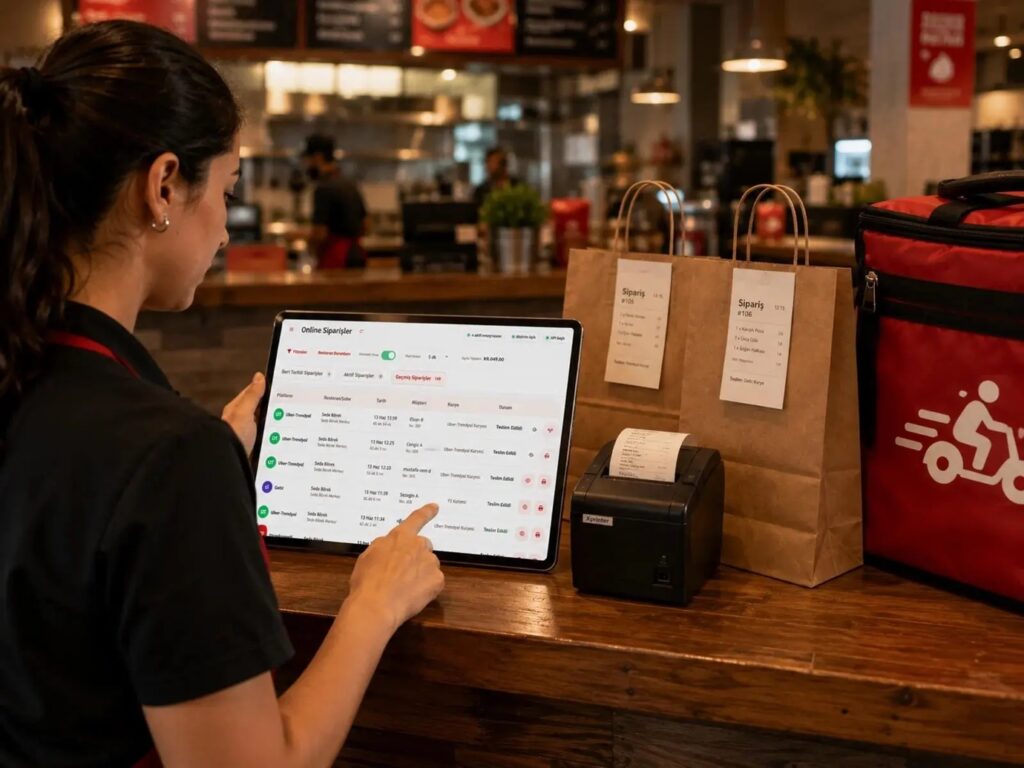
There’s another aspect of the food delivery business model that often goes unnoticed: customer ownership.
When a restaurant relies heavily on aggregators for its online orders, it is essentially building a part of its business on someone else’s platform.
Think about it. The customer discovers the restaurant through the aggregator’s app, browses its menu, reads its reviews, places an order and makes the payment through the platform. The aggregator controls much of this interaction, including how the restaurant appears in search results, its visibility, promotional opportunities and access to customer information.
The restaurant prepares the food and fulfils the order, but the relationship with the customer largely remains within the aggregator’s ecosystem.
A restaurant could have an exceptional menu, consistent food quality and hundreds of satisfied customers, yet its visibility might still depend on sponsored listings, customer ratings and promotional campaigns.
This creates a certain degree of dependency.
Restaurants may feel compelled to offer discounts, participate in promotional programmes or spend on advertising simply to maintain visibility and stay competitive. The more orders they generate through these platforms, the more difficult it can become to build an independent customer base.
Aggregators can introduce customers to a restaurant, but restaurants should have the opportunity to build and retain those relationships themselves.
After all, a restaurant’s long-term success should depend on the food it serves, the experience it creates and the loyalty it earns, rather than how visible it remains on someone else’s app.
7. The business model needs balance.
Let’s be clear. Food delivery aggregators have changed the industry for the better in many ways.
They have made restaurants more discoverable, expanded customer choice, created delivery opportunities and helped businesses reach customers beyond their immediate neighbourhoods.
For a new restaurant, being listed on a popular platform can provide visibility that would otherwise take years to establish.
For customers, the convenience is undeniable.
But the industry needs a healthier balance.
Restaurants should have fair commissions, access to customer data, greater control over reviews and the freedom to operate without pressure to participate in aggressive discounting and promotions.
Customers should be able to understand what they’re paying for, rather than discovering a series of additional charges at checkout.
And direct restaurant ordering should remain a viable, attractive alternative.
The objective shouldn’t be to eliminate aggregators. It should be to ensure that their commercial model works for everyone involved.
The Curious Wok Take
Food delivery apps have undoubtedly made our lives easier. The convenience of having almost any cuisine delivered to our doorstep is something we’ve come to appreciate. But perhaps we’ve become so accustomed to this convenience that we rarely stop to question the economics behind it.
When restaurants pay commissions to aggregators while customers separately bear a series of surcharges and taxes, it’s worth stepping back and looking at the bigger picture.
The restaurant is trying to protect its margins. The customer wants value for money. The delivery partner deserves fair compensation for their effort, and the aggregator needs a sustainable business model to continue operating.
All four are essential to this ecosystem. The challenge is ensuring that convenience and profitability don’t come at the expense of one another.
But beyond the economics, there’s something else we shouldn’t lose sight of: food has always been about relationships.
It’s the restaurant that remembers your usual order, the person who knows exactly how spicy you like your food, or the chef who occasionally prepares something off the menu just because they know you’ll enjoy it.
These little gestures are what make dining and ordering from a favourite restaurant personal. And no algorithm can truly replace them.
So, the next time you’re craving food from your favourite restaurant, consider checking whether you can order directly before opening an aggregator app.
You might save a little money, the restaurant might retain a little more of its hard-earned revenue, and both of you might benefit from a more direct relationship.
Because convenience is wonderful, but it shouldn’t come at the cost of fair business practices, customer value or the human connection that makes hospitality special.
The Curious Wok – Exploring Flavours, One Stir at a Time.