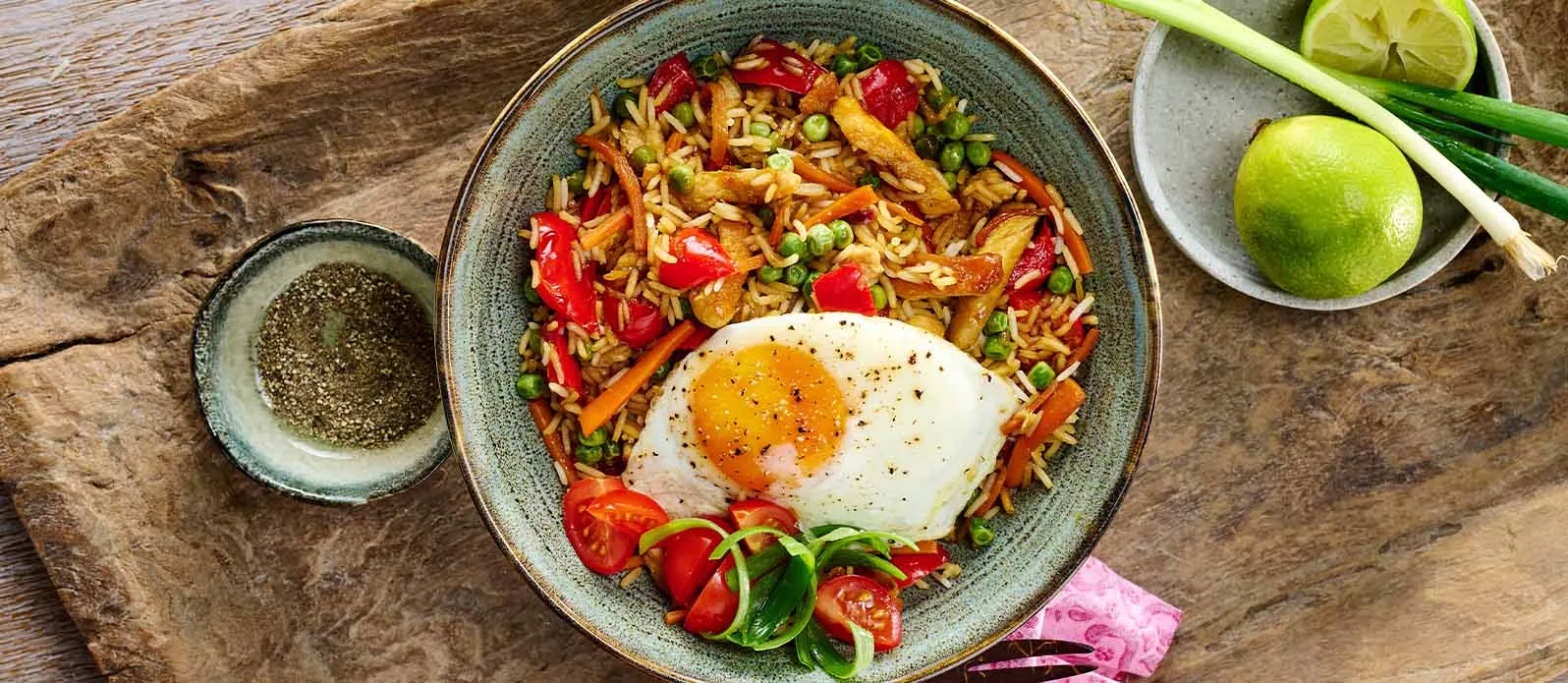
There’s something magical about fried rice.
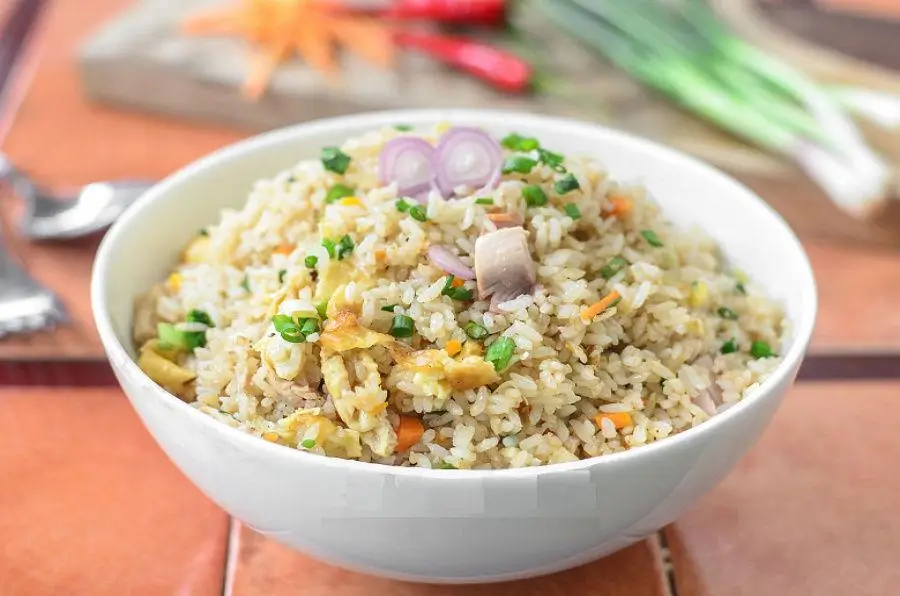
At its heart, it’s one of the simplest meals imaginable: yesterday’s rice, a handful of vegetables, an egg or two, maybe some protein and a hot pan. Yet when cooked well, these humble ingredients transform into something that feels remarkably close to restaurant food.
The secret isn’t expensive sauces, specialty ingredients, or a commercial kitchen. It’s technique. A little heat, a little timing, and an understanding of how flavour is built layer by layer.
Fried rice has long been the hero of home kitchens. It stretches leftovers into a satisfying meal, feeds hungry students, rescues busy weeknights, and delivers comfort in a single bowl. Across Asia, generations of cooks have relied on it as a practical, delicious answer to the question: “What can I make with what I already have?”
And perhaps the best part?
You can create a plate of genuinely restaurant-quality fried rice for less than ₹100.
No shortcuts. No compromises. Just simple ingredients, smart cooking, and the kind of kitchen wisdom that proves great food doesn’t have to be expensive.
Let’s fire up the wok.
Why Fried Rice Exists in Almost Every Culture
Fried rice was born from practicality.
Across Asia, leftover rice was never wasted. Day-old rice dries slightly, which makes it perfect for stir-frying because the grains stay separate instead of turning mushy.
China has Yangzhou fried rice.
Thailand has Khao Pad.
Indonesia has Nasi Goreng.
Japan has Chahan.
Korea has Bokkeum-Bap
Different flavours.
Same philosophy:
Use what you have. Make it delicious.
That spirit fits perfectly into Indian kitchens.
The ₹100 Fried Rice Formula
Great fried rice isn’t about expensive ingredients.
You don’t need premium sauces, imported seasonings, or a refrigerator full of vegetables. The secret lies in understanding a few simple elements that make every bowl satisfying:
- Rice
- Heat
- Aromatics
- Texture
- Balance
That’s the entire formula.
With just a handful of everyday ingredients, you can create a fried rice that rivals many takeaway versions—at a fraction of the cost.
Budget Breakdown (2 Servings)
| Ingredient | Approx. Cost |
| Rice (1 cup uncooked) | ₹15 |
| Onion | ₹5 |
| Carrot | ₹8 |
| Garlic & Spring onion | ₹10 |
| Cabbage | ₹6 |
| Soy sauce & Vinegar | ₹8 |
| Oil & seasonings | ₹12 |
| Protein (choose one) | |
| 2 Eggs | ₹14 |
| 100g Chicken (boneless) | ₹25–35 |
| Typical Total (with eggs) | ~ ₹78 |
| Typical Total (with paneer) | ~ ₹89–99 |
Even allowing for regional price differences, you’ll stay surprisingly close to the ₹100 mark.
The beauty of fried rice is its flexibility. Whether you’re cooking with eggs, leftover chicken, or simply the vegetables already in your fridge, the result remains the same: a hearty, flavour-packed meal that delivers far more satisfaction than its price tag suggests.
Ingredients
For the Fried Rice
- 2 cups cooked rice (preferably cold/day-old)
- 2 eggs
- 1 small onion, finely chopped
- 4–5 garlic cloves, minced
- 1 small carrot, diced
- Small handful cabbage or spring onion
- 1–2 green chilies (optional)
- 1 tsp soy sauce
- 1 tsp vinegar
- Salt, to taste
- White Pepper, a pinch
- 2 tbsp oil
Optional additions:
- Capsicum
- Chicken
- Schezwan sauce
Fried rice is flexible cooking.
That’s the beauty of it.
Step 1: Start with Cold Rice
Cold rice is the secret behind fluffy, separated grains. Freshly cooked rice contains excess moisture, which can quickly turn fried rice into a sticky, clumpy mess. Cold rice dries slightly, helping grains stay separate and absorb flavour better.
If you don’t have leftover rice:
Simply:
- Cook the rice
- Spread it out on a tray or large plate
- Allow it to cool completely
Even 30 minutes of cooling can make a noticeable difference.
Step 2: Heat the Pan Properly
Fried rice loves high heat.
Before the first ingredient touches the pan, it should already be shimmering with heat. This quick, intense cooking creates:
- Light caramelisation
- Subtle smokiness
- Better texture
- Faster cooking
It’s also the closest most home cooks will come to achieving wok-hei—the elusive “breath of the wok” that gives great stir-fries their characteristic smoky depth.
Step 3: Build Flavour in Layers
Add the oil and begin with the aromatics:
- Garlic
- Green chili
- Onion
Allow the garlic to turn lightly golden and fragrant, but not burnt.
This moment is where the foundation of flavour is built.
Next, add:
- Carrot
- Cabbage and spring onion whites
Stir-fry for a minute or two until the vegetables are cooked but still retain a little crunch.
Great fried rice should have texture. Soft vegetables and soggy rice are the enemy.
Step 4: Scramble the Eggs
Push the vegetables to one side of the pan and crack the eggs directly onto the empty surface.
Scramble quickly, then fold them through the vegetables.
This technique creates small pockets of egg throughout the rice rather than large chunks of omelette.
It’s fast.
It’s slightly messy.
And it’s exactly how many street vendors do it.
Step 5: Add the Rice
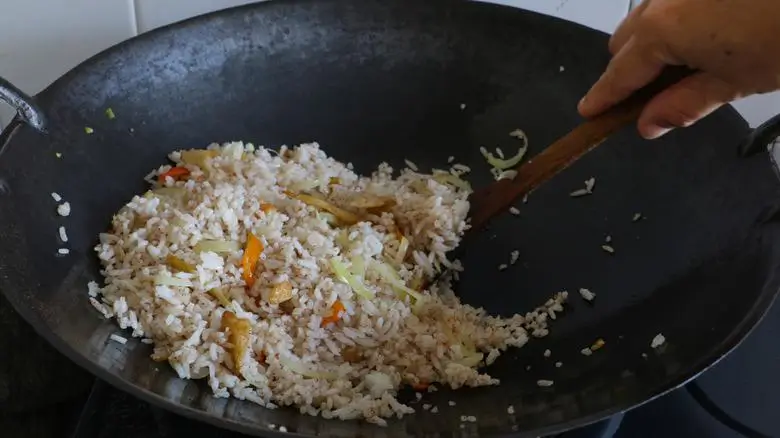
Break up any clumps before adding the rice to the pan.
Toss everything together over high heat until the grains are evenly coated with the aromatics and vegetables.
Season with:
- Soy sauce
- Vinegar
- Salt
- White pepper
Resist the temptation to add too much sauce.
The goal is flavour, not a bowl of dark brown rice. A small amount of soy sauce should enhance the dish, not dominate it.
Step 6: Finish Strong
Just before serving, add the spring onion greens and give everything one final toss.
Turn off the heat and allow the residual warmth to release their fresh aroma.
It may seem like a small step, but those final few seconds often make the difference between good fried rice and memorable fried rice.
What Makes Cheap Fried Rice Taste Expensive?
The answer is almost never found in the ingredient list.
Great fried rice doesn’t rely on premium sauces, fancy vegetables, or expensive proteins. What separates an average bowl from an exceptional one is technique.
The real upgrades come from:
- Cooking over high heat
- Using properly chilled rice
- Seasoning with restraint
- Creating a touch of char and smokiness
- Building flavour through layers of aromatics
- Balancing soft, crisp, and fluffy textures
These are the details that transform humble ingredients into something memorable.
A well-made ₹90 plate of fried rice can easily outperform an overpriced takeaway order because flavour isn’t always a matter of budget—it’s a matter of execution.
The best fried rice doesn’t taste expensive.
It tastes intentional.
The Secret Ingredient Is Leftovers
Some of the best fried rice you’ll ever eat wasn’t planned.
It begins with yesterday’s rice sitting quietly in the fridge. A leftover omelette from breakfast. A handful of roasted chicken. Half a carrot. A few spring onions that need using before they’re forgotten.
Individually, these ingredients may seem uninspiring.
Together, they become fried rice.
That’s the quiet genius of the dish. It transforms odds and ends into something greater than the sum of its parts, turning potential waste into a meal that’s deeply satisfying.
More than any recipe, fried rice teaches one of the most valuable lessons in cooking:
Great food isn’t always born from abundance.
More often, it’s born from resourcefulness.
A skilled cook doesn’t just know how to follow a recipe. They know how to look at leftovers and see possibilities.
Common Fried Rice Mistakes (And How to Avoid Them)
Fried rice is simple, but a few small mistakes can mean the difference between a light, flavourful bowl and a disappointing one. Fortunately, they’re easy to avoid once you know what to watch for.
1. Using Freshly Cooked Rice
Fresh rice contains too much moisture. When stir-fried, the grains tend to stick together, creating a soft, clumpy texture rather than the fluffy, separated grains that define good fried rice.
The fix: Use day-old rice or allow freshly cooked rice to cool completely before cooking.
2. Overcrowding the Pan
Adding too much rice or too many ingredients at once lowers the temperature of the pan. Instead of frying, the ingredients begin to steam.
The fix: Cook in batches if necessary and give the ingredients room to move.
3. Using Too Much Sauce
A common misconception is that more sauce equals more flavour. In reality, excess sauce overwhelms the rice, making it salty, soggy, and one-dimensional.
The fix: Season lightly and let the aromatics, vegetables, and high-heat cooking do most of the work.
4. Overcooking the Vegetables
Vegetables should bring freshness, colour, and texture to fried rice. Cook them too long, and they lose their crunch, sweetness, and character.
The fix: Stir-fry vegetables briefly so they remain vibrant and slightly crisp.
5. Cooking Over Low Heat
Fried rice thrives on intense heat. Without it, you miss out on the subtle char, smoky aroma, and lively texture that make the dish so satisfying.
The fix: Heat your wok or pan thoroughly before cooking and keep the ingredients moving.
The difference between average fried rice and great fried rice often comes down to avoiding these five mistakes. Master them, and even the simplest ingredients can produce restaurant-worthy results.
“Great fried rice isn’t about adding more ingredients. It’s about making fewer mistakes.” — The Curious Wok
The Ultimate ₹100 Meal
Few dishes offer as much value as a humble plate of fried rice.
In a single pan, you get:
- Comfort
- Protein
- Carbohydrates
- Vegetables
- Flavour
- Speed
- Endless adaptability
It’s a complete meal built from simple ingredients and a little know-how.
Perhaps that’s why fried rice has endured across cultures and generations—from bustling street stalls in Bangkok to late-night hostel kitchens in India, from family dinners to quick weekday lunches.
The appeal isn’t just affordability.
It’s ingenuity.
Fried rice proves that great cooking doesn’t depend on expensive ingredients or elaborate techniques. Sometimes, the most satisfying meals come from making the most of what you already have.
Simple.
Resourceful.
Delicious.
That’s the enduring genius of fried rice.
The Curious Wok Tip
If you’re chasing restaurant-quality fried rice at home, remember that the secret isn’t hidden in a bottle of sauce.
It’s in the fundamentals.
Cook over high heat.
Keep the ingredients moving.
Season with restraint.
And never underestimate the value of day-old rice.
The best fried rice is born from simplicity, speed, and a little bit of intuition.
Because fried rice isn’t merely a recipe.
It’s a lesson in resourcefulness—a dish that generations of home cooks have perfected by turning leftovers into something extraordinary.