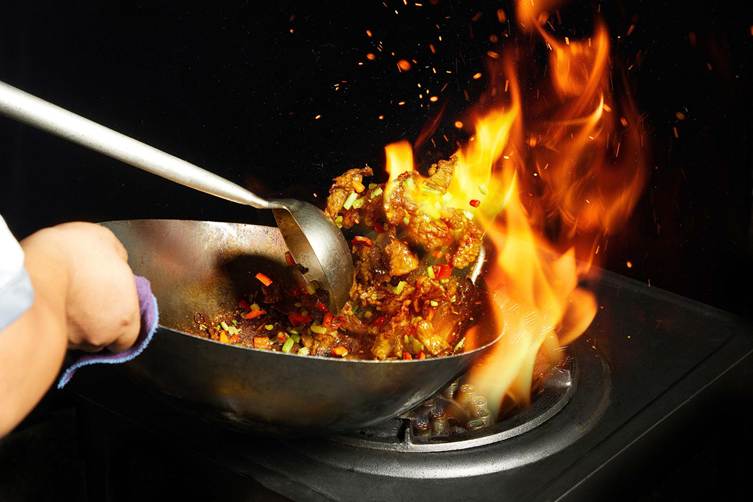
Discover the secret behind restaurant-style stir fries with this complete guide to wok-hei—the “breath of the wok.” Learn the science, techniques, and home hacks to master smoky wok cooking.
You’ve probably experienced wok-hei without realizing it.
Wok hei—literally means “breath of the wok”— is the smoky, slightly charred, deeply savoury flavour in a plate of street-style chowmein. The irresistible aroma rising from a bowl of fried rice from a bustling street stall in Bangkok. That fleeting taste of fire-kissed noodles that somehow feels impossible to recreate at home.
You follow recipes.
You buy soy sauce.
You chop vegetables properly.
And yet… your stir-fry tastes flat.
The missing ingredient?
Wok-hei.
Often translated as “the breath of the wok,” wok-hei is the soul of Cantonese stir-frying. It’s not an ingredient you can buy—it’s a cooking phenomenon created through heat, speed, movement, and controlled chaos.
We’ll explore the essential equipment you need, including why a carbon steel wok and proper gas burner setup make all the difference. You’ll also discover the key ingredients and high heat stir frying methods that create that distinctive smoky taste. And once you understand it, your cooking changes forever.
What Exactly Is Wok-Hei?
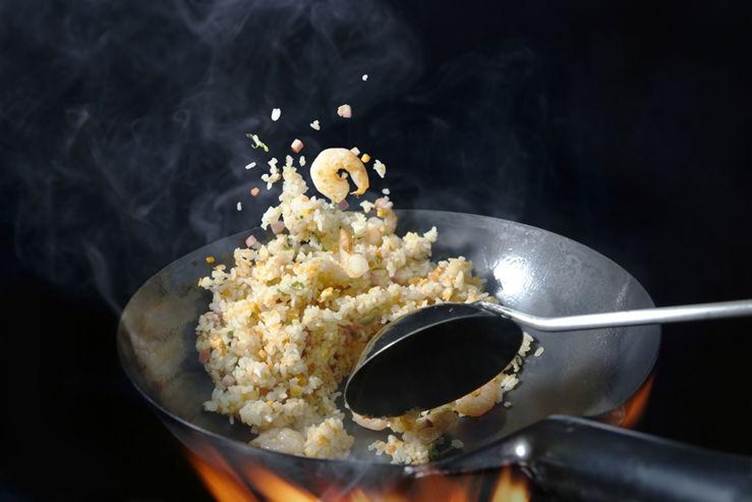
Wok-hei (often translated as “the breath of the wok”) comes from Cantonese cooking and describes that unmistakable smoky aroma and deep savoury flavour you get when food is cooked at extremely high heat in a well-seasoned wok.
It’s the combination of:
- Smoke
- Caramelisation
- The Maillard reaction
- Oil vaporisation
- Slight charring
- Direct metal contact heat
- Flame interaction with aerosolized fats
Yes—it sounds scientific, because it is.
When ingredients hit a blazing hot wok, several reactions happen almost instantly. Proteins and sugars brown rapidly through the Maillard reaction, creating deep savoury flavours while vegetables stay crisp and vibrant. At the same time, oil in the wok begins to vaporise on contact with intense heat. As ingredients are tossed through the pan, tiny droplets of fat can briefly ignite when they meet open flames, producing the signature smoky compounds that cling to the food.
That’s why restaurant fried rice tastes dramatically different from rice cooked in a regular pan at home —it’s not just the recipe, it’s the heat.
Wok-hei is heavily associated with classics like:
- Beef Chow Fun
- Yangzhou Fried Rice
- Kung Pao Chicken
- Pad See Ew
- Pad Kee Mao
- Pad Kra Pow
- Hakka Noodles
Why Home Cooks Struggle With Wok-Hei
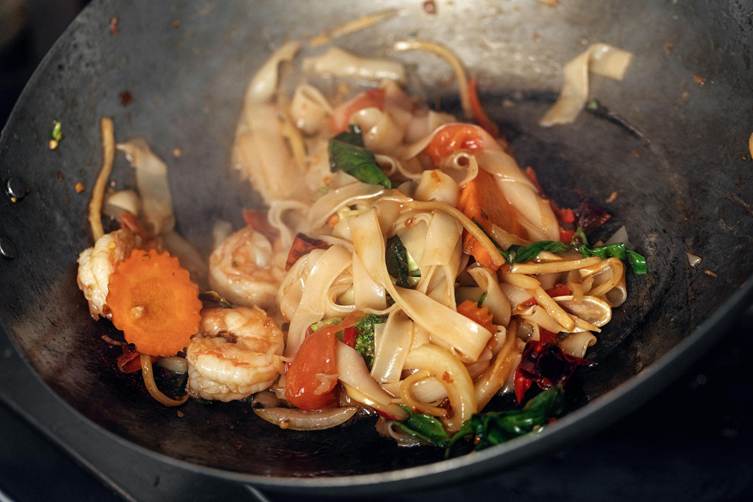
Here’s the hard truth: recreating authentic wok-hei at home is difficult—and it’s not entirely your fault. Most home kitchens simply aren’t built for the kind of intense heat that professional wok cooking demands.
In restaurant kitchens, wok burners can generate anywhere between 100,000–200,000 BTUs, producing the roaring flames needed to create that signature smoky flavour. In comparison, most home gas stoves operate at just 5,000–20,000 BTUs. That gap in heat output makes a noticeable difference in the final dish.
But heat isn’t the only challenge. A few common habits can make achieving wok-hei even harder:
Overcrowding the wok
Adding too much food at once causes the temperature to drop instantly, leading to steaming instead of searing.
Cooking with wet ingredients
Excess moisture from vegetables, proteins, or freshly cooked rice creates steam, preventing proper browning and char.
Using the wrong cookware
A flat skillet or non-stick pan won’t replicate the concentrated heat and shape of a traditional wok.
Moving too slowly
Wok cooking is fast, intense, and requires confidence. Hesitation often means overcooked ingredients and lost heat.
Stirring constantly
While stir-frying sounds like nonstop movement, allowing ingredients to sit briefly against the hot surface helps develop caramelisation and those prized smoky edges.
Mastering wok-hei at home isn’t about perfectly replicating restaurant equipment—it’s about understanding these limitations and learning how to work around them.Top of Form
Bottom of Form
The Science Behind the Magic
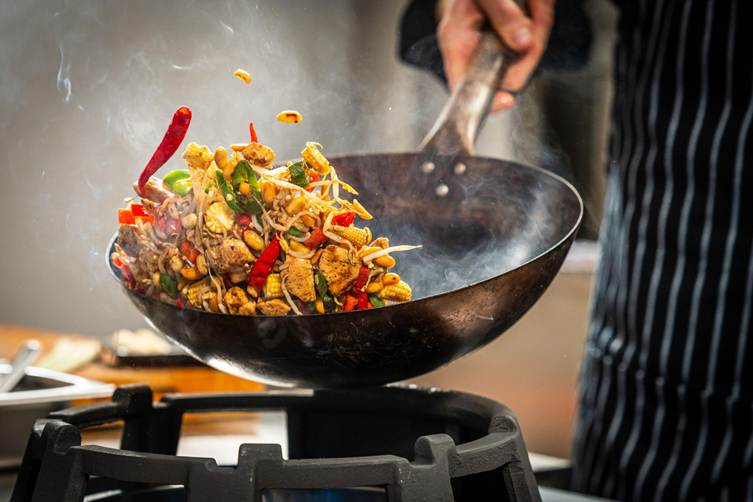
Three things create wok-hei:
1. Maillard Reaction
Proteins and sugars react under high heat, creating deeper flavours.
Think browned noodles and seared meat.
2. Caramelisation
Natural sugars in onions, sauces, and vegetables develop sweetness.
3. Combustion Aromatics
This is the secret weapon. When atomized oil meets open flame, it creates smoky aromatic compounds that become signature wok flavour.
This is why electric stovetops often struggle to replicate authentic wok-hei.
How Restaurants Achieve It
Walk into any Cantonese restaurant kitchen and you’ll notice:
- Jet-engine burners
- Carbon steel woks
- Constant tossing
- Prepped ingredients
- Cooking times under 2 minutes
Everything is designed for speed.
This is called mise en place, a French culinary term that simply means everything is prepared before cooking begins.
Because once the wok gets hot—you move fast.
How to Create Wok-Hei at Home
Good news:
You don’t need a restaurant kitchen.
You just need smarter technique.
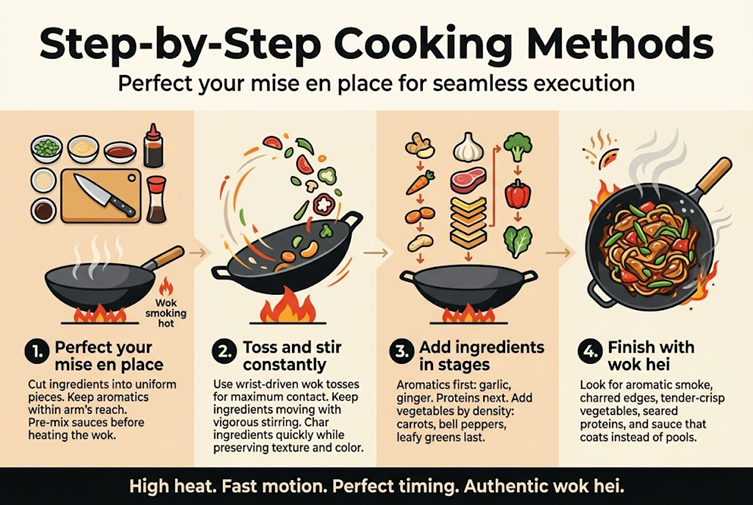
1. Use Carbon Steel Woks
Carbon steel heats quickly and responds rapidly to temperature changes.
Avoid:
- Non-stick woks
- Heavy cast iron for quick stir-fries
- Tiny pans
2. Preheat Until Smoking
Your wok should be extremely hot before oil goes in.
If it isn’t lightly smoking—
it isn’t ready.
3. Cook in Small Batches
Less food = more heat retention.
This is why restaurant fried rice portions are often cooked one serving at a time.
4. Dry Your Ingredients
Pat proteins dry.
Drain vegetables.
Use day-old rice.
Moisture kills wok-hei.
5. Let Food Sit Briefly
Not everything needs constant movement.
Sometimes letting noodles hit hot metal for a few seconds creates the char you want.
6. Use High Smoke Point Oils
Good choices:
- Peanut Oil
- Avocado Oil
- Canola Oil
Avoid extra virgin olive oil.
The Torch Hack (Restaurant Flavour at Home)
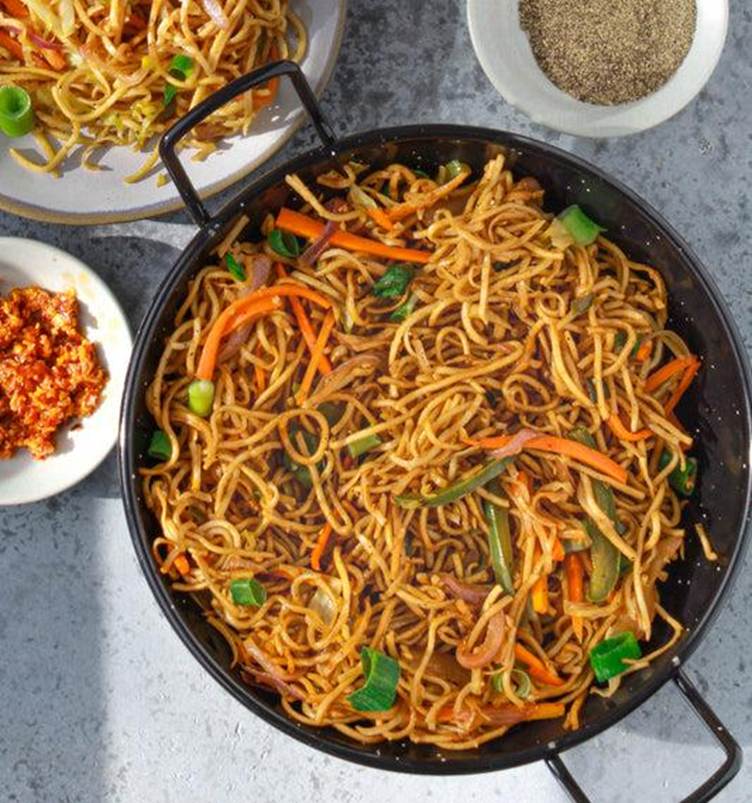
Many modern chefs use a small culinary torch to mimic wok-hei.
Once noodles or rice are nearly done:
- Toss continuously
- Briefly torch edges
- Create slight smoky char
Use caution—but it works surprisingly well.
The Biggest Myth About Wok Cooking
It’s easy to assume wok cooking is all about dramatic tossing—the kind you see on TV, flames leaping as chefs flip noodles through the air.
But that’s not where the magic lies.
At its core, wok cooking is about control:
- Managing intense heat
- Prepping ingredients with precision
- Timing every movement perfectly
- Cooking with confidence, not hesitation
The tossing? That’s just the visible flourish. The real skill is everything happening underneath it—built through repetition, discipline, and a deep understanding of how heat and ingredients interact.
Final Thoughts: Learn to Cook With Fire, Not Fear
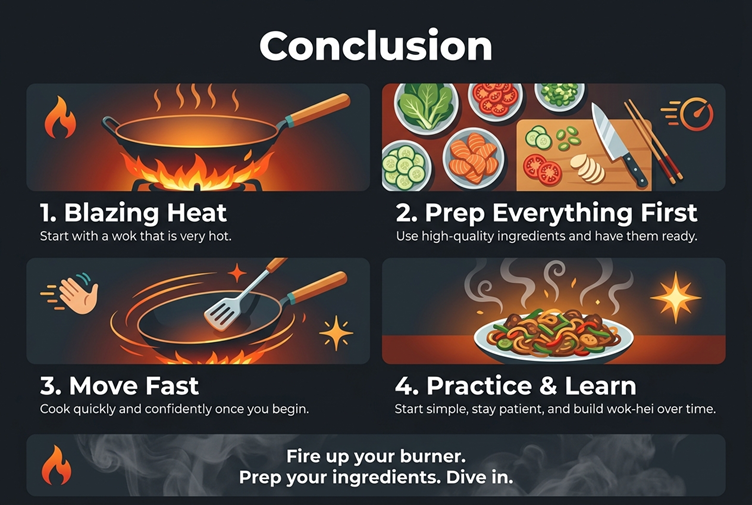
Getting wok-hei right comes down to understanding that magical combination of scorching heat, proper equipment, and quick movements that create those incredible smoky flavours. You need a blazing hot wok, high-quality ingredients that can handle the heat, and the confidence to move fast once you start cooking. The beauty of wok-hei isn’t just about following a recipe – it’s about embracing the entire cooking process and letting that intense heat transform your ingredients into something truly special.
Start practicing with simple stir-fries and don’t get discouraged if your first attempts don’t have that perfect smoky taste. Every home cook can learn to create authentic wok-hei with patience and the right approach. Fire up your burner as high as it will go, get your ingredients prepped and ready, and dive into this amazing cooking technique that’s been perfected over centuries.
And that’s the beauty of The Curious Wok.
We’re not just learning recipes.
We’re learning fire.